Sie haben ein Upgrade auf LED-Autoscheinwerfer für bessere Sicht. Stattdessen wirst du jede Nacht von entgegenkommenden Fahrern geblendet. Deine brandneuen LED-Autoscheinwerfer sind zu hell – nicht weil LEDs grundsätzlich gefährlich sind, sondern weil zwischen dem Karton und deinem Fahrzeug etwas schiefgelaufen ist. Basierend auf unseren technischen Tests mit Tausenden von Fahrzeugmodellen erklären wir, was die Blendung tatsächlich verursacht und wie du sie genau beheben kannst, ohne die Sicht zu verlieren, für die du bezahlt hast.
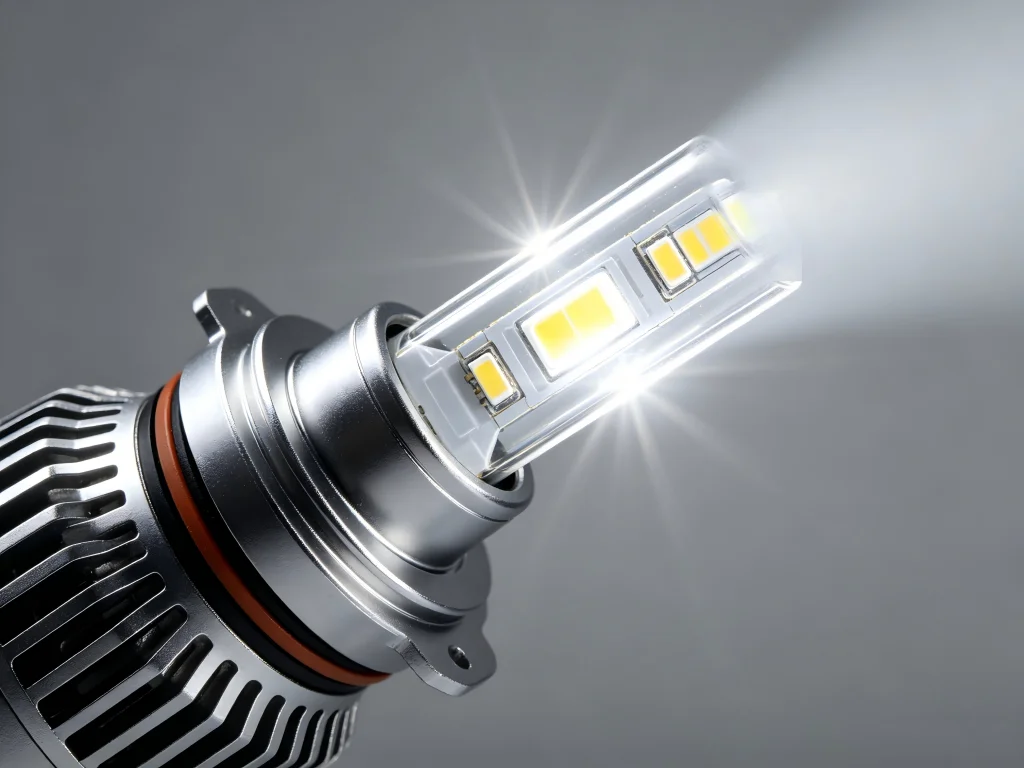
Problem: Ihr “Upgrade” macht das Nachtfahren für alle schlimmer
Du hast keine LED-Autoscheinwerfer gekauft, um zu werden, dieser Fahrer – derjenige, den nachts alle hassen. Du hast sie gekauft, weil Halogenlampen sich auf modernen Straßen wie Kerzen anfühlen. Aber jetzt zeigt dein Armaturenbrett Fehlercodes, dein Lichtkegel sieht aus wie ein Schrotschuss, und andere Fahrer blenden dich mit ihrem Fernlicht, als wärst du das Problem.
Hier ist die kurze Antwort: Die meisten Aftermarket-LED-Scheinwerfer-Kits scheitern, weil sie den exakten Brennpunkt des ursprünglichen Halogenfadens nicht nachbilden. Wenn sich die Lichtquelle auch nur um einen Millimeter verschiebt, streut dein Gehäuse das Licht überall hin, nur nicht dorthin, wo es hingehört – direkt in den entgegenkommenden Verkehr.
Die Zahlen sprechen für sich. LED-Scheinwerfer sind etwa 300% heller als Halogenlampen. Sie erzeugen 200 Lumen pro Watt im Vergleich zu nur 24 Lumen pro Watt bei Halogen. Das ist ein gewaltiger Sprung in der Rohleistung. Aber rohe Leistung ohne richtige Optik ist kein Upgrade – sie ist eine Gefahr.
Fast 90% der Fahrer geben in Umfragen an, dass sie zumindest einige Autoscheinwerfer zu hell finden. Mehr als die Hälfte sagt, dass sie durch Blendung vorübergehend geblendet wurden. A ein Viertel der Fahrer haben entweder ihre Nachtfahrten reduziert oder ganz eingestellt, wegen heller Scheinwerfer. Das ist keine kleine Unannehmlichkeit. Das ist eine Krise der öffentlichen Sicherheit, die sich Stück für Stück mit falsch kalibrierten LED-Kits entfaltet.
Ärger: Warum billige LEDs Sie mehr als nur Geld kosten
Der Aftermarket ist überschwemmt mit “50.000 Lumen”-Kits, die blendendes Streulicht erzeugen, anstatt brauchbare Straßenausleuchtung. Diese Produkte nutzen denselben Irrglauben aus: dass mehr Lumen gleichbedeutend mit besseren Scheinwerfern ist.
Das ist es nicht.
Hier ist, was tatsächlich passiert, wenn Sie ein schlecht konstruiertes LED-Kit einbauen:
- Ihr Lichtkegel bricht. Der LED-Chip sitzt an der falschen Position relativ zu Ihrem Reflektor oder Projektor. Statt eines scharfen horizontalen Abschneidens erhalten Sie einen unordentlichen Lichtfleck, der in den Gegenverkehr überläuft.
- Ihre Farbtemperatur blendet. LEDs erzeugen ein bläulicheres Licht (5000K–6500K) im Vergleich zum wärmeren Gelb von Halogenlampen (3200K). Dieses blau-weiße Licht streut mehr im menschlichen Auge, wodurch Blendung selbst bei gleicher Lumenleistung intensiver wirkt.
- Ihr Fahrzeug lehnt sie ab. Moderne Autos verwenden CANBUS Systeme, die den Widerstand der Glühbirnen überwachen. LEDs ziehen weniger Strom als Halogenlampen, also denkt Ihr Auto, die Birne sei durchgebrannt. Sie erhalten Flackern, Fehlercodes und manchmal gehen die Lichter gar nicht erst an.
- Ihre Lichter überhitzen und dimmen. Ohne ordnungsgemäßes Wärmemanagement reduzieren LED-Chips ihre Leistung (derate), wenn sie heiß werden. Das “helle” Kit, das Sie gekauft haben? Es ist nach 20 Minuten Fahrt 30 % dunkler.
Eine Studie aus dem Jahr 2025, die Halogen-, HID- und LED-Beleuchtung verglich, ergab, dass LEDs in Projektorgehäusen zwar eine deutliche Überlegenheit zeigten, die Studie jedoch davon abriet, LED-Quellen in Reflektoranordnungen zu verwenden insgesamt. Die Designmerkmale von Reflektoren spielen einfach nicht gut mit den meisten LED-Nachrüstungen zusammen.
Und hier ist der Teil, den dir niemand erzählt: Das Bestehen einer Hauptuntersuchung (TÜV) oder einer staatlichen Inspektion macht deine LED-Umrüstung nicht legal. Im Vereinigten Königreich sind LED-Umrüstlampen für Halogenleuchten für moderne Fahrzeuge im Allgemeinen nicht straßenzugelassen. In Australien entsprechen nachgerüstete LED-Ersatzlampen in Halogenleuchten nicht der ADR-Norm. In den USA hat die National Highway Traffic Safety Administration ausdrücklich erklärt, dass nachgerüstete LED-Ersatzlampen in Halogenleuchten nicht bundesweit konform gemäß FMVSS 108 sind.
Du hast nicht nur Geld verschwendet. Du hast dein Auto illegal, unsicher, und lästiger für alle um dich herum gemacht.
Lösung: Der Engineering-First-Ansatz für LED-Autoscheinwerfer, die tatsächlich funktionieren
Hier ist die gute Nachricht: LED-Autoscheinwerfer können außergewöhnlich sein. They deliver better visibility, longer lifespan, and lower energy draw than halogens — when they’re engineered correctly.
The difference between a $30 Amazon kit that blinds everyone and a properly engineered LED system comes down to four things:
1. Optische Ausrichtung (Lichtkegelmuster)
The LED emitter must sit at the exact focal point where your halogen filament used to be. If it doesn’t, your beam pattern scatters. Period.
The Philips ZES chip is widely considered the gold standard for beam accuracy because its dimensions (1.6mm x 2.0mm) closely match the halogen filament width. This matters enormously in projector housings, where precise focus creates that sharp cutoff line that keeps light on the road and out of oncoming eyes.
Cheaper chips like Cree XHP use larger packages (5.0mm) that disrupt focus entirely. They’re bright, sure. But brightness without focus is just glare with extra steps.
2. Wärmemanagement
Heat is the silent killer of LED performance. As the PN junction temperature rises, luminous flux and wavelength degrade.
Active cooling (using a small fan) can reduce heatsink temperature by up to 51% compared to passive cooling. This allows the bulb to sustain higher brightness for longer periods without thermal derating. Passive cooling (fanless) has no moving parts to fail, but it’s less efficient per square inch.
The right choice depends on your housing, your climate, and how you drive. In extreme conditions — think Australian summer or Dubai heat — active cooling isn’t optional. It’s survival.
3. Elektrische Integration (CANBUS-Kompatibilität)
Your vehicle’s computer expects to see a certain resistance from your headlights. LEDs draw less power, so the computer thinks the bulb is out.
The best solution is integrated CANBUS decoding built into the LED driver, not external resistors that convert voltage into heat and create fire hazards.
External load resistors are a workaround, not a solution. They generate significant heat and must be mounted to metal surfaces. Integrated intelligent drivers are the OEM-grade approach that communicates seamlessly with your vehicle’s systems.
4. Gehäusekompatibilität
Not all LEDs work in all housings. Period.
| Gehäusetyp | Empfohlener Chip | Warum |
|---|---|---|
| Projektor | Philips ZES | Präzise 1,6 mm x 2,0 mm Größe entspricht Halogenfaden für scharfe Abschneidekante |
| Reflektor | CSP (neuere Generationen) | Höhere Helligkeit pro Watt; Unterschied in der Strahlqualität hat sich deutlich verringert |
| Offroad / Spezial | Cree XHP/XPG | Sehr hohe Leistung, aber schlechte Strahlfokussierung – nicht straßenzugelassen |
Quelle: Unabhängige LED-Chip-Analyse
Was echte Fahrer sagen
Ein Fahrer bezeichnete ihr ordnungsgemäß entwickeltes LED-Upgrade als “totalen Gamechanger”, nachdem sie jahrelang mit billigen Kits zu kämpfen hatten. Ein anderer berichtete von “null Ausfällen über 14 Monate bei 120 Einheiten” nach dem Wechsel von Billigmarken.
Bei einem Scheinwerfer-Vergleichstest 2026 übertrafen die H11-Birnen einer führenden Marke alle anderen getesteten Sets, wobei die Tester feststellten, dass der Strahl “ruhig” wirkte – kein Flackern, keine harten Übergänge.
Das ist der Unterschied zwischen Technik und Marketing. Eines funktioniert. Das andere verkauft nur Kästen.
Häufig gestellte Fragen zu LED-Autoscheinwerfern
Sind LED-Autoscheinwerfer legal?
Ab Werk installierte LED-Scheinwerfer sind überall legal. Nachrüst-LED-Ersatzlampen in Halogen-Scheinwerfern sind nicht in den USA gemäß FMVSS 108 bundesweit konform. Im Vereinigten Königreich sind sie für moderne Fahrzeuge im Allgemeinen nicht straßenzulässig. In Australien müssen sie ADR 13/00 entsprechen.
Warum flackern meine LED-Scheinwerfer?
Das CANBUS-System Ihres Fahrzeugs erkennt den geringeren Stromverbrauch von LEDs und nimmt an, dass die Glühlampe durchgebrannt ist. Die Lösung ist entweder eine integrierte CANBUS-Decodierung oder ein externes Decoder-Modul.
Sind 6000K LED-Scheinwerfer legal?
Die Farbtemperatur allein bestimmt nicht die Legalität. Entscheidend ist, ob die komplette Scheinwerferbaugruppe die Straßenbeleuchtungsvorschriften Ihres Marktes erfüllt. Eine 6000K-Lampe in einem konformen Gehäuse ist legal. Eine 6000K-Lampe in einem Halogen-Gehäuse, das Licht streut, ist es nicht.
Kann ich LED-Lampen in meine Halogen-Scheinwerfer einsetzen?
Physisch ja. Rechtlich wahrscheinlich nicht. In den meisten regulierten Märkten sind Halogen-Scheinwerfer nicht für LED-Lichtquellen ausgelegt. Ein Umbau erzeugt Blendung, reduziert die Sicht und verstößt gegen die Typgenehmigungsnormen.
Wie hell sollten LED-Scheinwerfer sein?
Helligkeit ist nicht die richtige Frage. Nutzbares Licht ist entscheidend. Ein richtig fokussierter 3.000-Lumen-LED-Scheinwerfer übertrifft jedes Mal einen gestreuten 10.000-Lumen-Satz. Achten Sie auf Strahlgenauigkeit statt auf Lumen-Angaben.
Halten LED-Scheinwerfer länger als Halogen?
Ja. LED-Systeme halten unter normalen Bedingungen üblicherweise 15.000 bis 50.000 Stunden. Halogenlampen halten typischerweise 500 bis 1.000 Stunden. Das ist 30 bis 50 Mal länger.
Wie richte ich meine LED-Scheinwerfer aus?
Die Hell-Dunkel-Grenze sollte bei 25 Fuß etwa 50–75 mm unter Ihrem horizontalen Referenzband liegen. Die Oberkante Ihres Lichtkegels sollte bei dieser Entfernung nicht mehr als 2 Zoll unter der Scheinwerfermitte liegen.
Hören Sie auf, sich mit Scheinwerfern zufriedenzugeben, die nicht funktionieren
Sie haben nicht aufgerüstet auf LED-Autoscheinwerfer um das Fahren noch schlimmer zu machen. Sie haben aufgerüstet, um besser zu sehen, sicherer zu fahren und endlich das Nachtfahren zu genießen, statt es zu fürchten.
Das Problem ist nicht die LED-Technologie. Das Problem ist billige Technik, die als Schnäppchen getarnt ist.
Bei GTR, wir verkaufen keine Lumen-Versprechen. Wir verkaufen Lichtkegel, die funktionieren. Jeder GTR-LED-Scheinwerfer ist so konstruiert, dass er der ursprünglichen optischen Geometrie Ihres Fahrzeugs entspricht, mit integrierter CANBUS-Decodierung, aktivem Wärmemanagement und Chip-Auswahl basierend auf Ihrem spezifischen Gehäusetyp – nicht dem, was in der Fabrik in der Woche am billigsten war.
Tausende Fahrer haben den Wechsel vollzogen. Sie werden nicht geblendet. Sie bekommen keine Fehlermeldungen. Sie bekommen einfach bessere Sicht, Nacht für Nacht.
Bereit, Ihre Scheinwerfer endgültig zu reparieren? Besuchen Sie GTR Lighting noch heute und finden Sie das exakte LED-Upgrade, das für Ihr Fahrzeug entwickelt wurde. Denn die Straße vor Ihnen verdient mehr als Raten.