Kauf LED-H11-Scheinwerferlampen sollten das Fahren bei Nacht erleichtern. Doch viele Fahrer bauen ein neues Set ein und entdecken ein anderes Problem: Die Scheinwerfer erscheinen an einer Garagenwand dramatisch heller, aber die Straße vor ihnen ist weiterhin schwer zu erkennen. Andere haben mit Blendung, Flackern, dunklen Flecken, Lüftergeräuschen oder Lampen zu kämpfen, die einfach nicht passen.
Das Problem ist selten die LED-Technologie selbst. Es ist meist die Art und Weise, wie die LED-Lichtquelle mit einem Scheinwerfergehäuse interagiert, das ursprünglich um einen präzise positionierten H11-Halogenglühfaden herum konstruiert wurde.
Wenn Sie nachts dunkle Autobahnen, nasse Straßen, Landstraßen oder Langstrecken fahren, macht dieser Unterschied etwas aus. Sie brauchen nicht mehr unkontrolliertes Licht. Sie brauchen mehr verwendbar Licht im richtigen Teil der Straße.
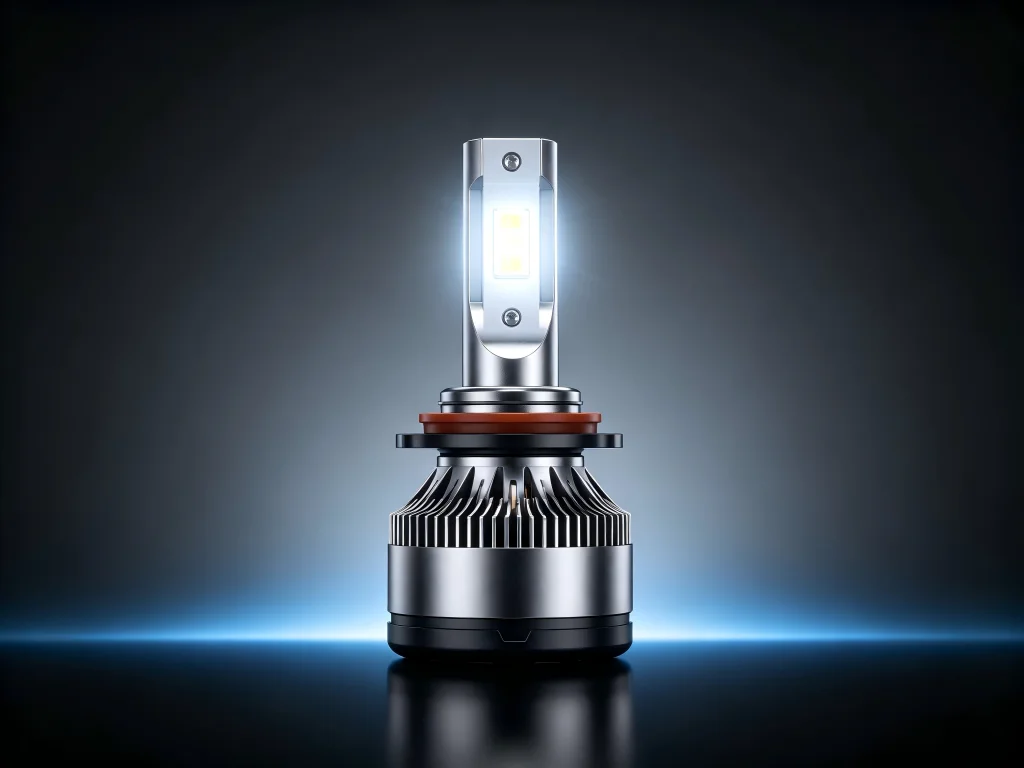
Warum können H11-LED-Scheinwerfer hell aussehen, aber schlecht leuchten?
Eine H11-LED kann extrem hell erscheinen und dennoch eine schlechte Straßensicht bieten, wenn ihre LED-Emitter nicht mit der Position des ursprünglichen Halogenglühfadens übereinstimmen. Der Reflektor oder Projektor lenkt das Licht dann in die falschen Bereiche und erzeugt Blendung, übermäßige Vordergrundbeleuchtung, schwache Fernlichtausleuchtung oder eine ungleichmäßige Hell-Dunkel-Grenze statt nützlicher Sicht nach vorn.
Dies ist eines der frustrierendsten Probleme bei Scheinwerfer-Upgrades.
Sie installieren eine Lampe, die mit einer riesigen Lumenangabe beworben wird. Sie schalten sie ein. Die Garagenwand wird weiß. Verkehrsschilder leuchten. Alles in der Nähe des Fahrzeugs erscheint heller.
Dann fahren Sie auf eine dunkle Autobahn.
Zwanzig oder dreißig Meter voraus sieht die Straße bei Weitem nicht so beeindruckend aus.
Der Grund ist die optische Geometrie.
Das Scheinwerfergehäuse ist Teil des Beleuchtungssystems
Eine H11-Lampe beleuchtet die Straße nicht von selbst. Die Lampe erzeugt Licht, während der Reflektor oder Projektor dieses Licht sammelt und neu verteilt.
Der ursprüngliche Halogenglühfaden sitzt an einer bestimmten Brennpunktposition. Das optische System wurde um diese Position herum konstruiert.
Wenn ein LED-Ersatz seine lichtemittierende Fläche zu weit vorn, hinten, oben oder seitlich platziert, empfängt der Reflektor Licht von einer anderen Stelle.
Das verändert, wohin das Licht gelangt.
Eine Lampe kann daher insgesamt mehr Licht erzeugen und dennoch weniger nutzbare Beleuchtung dorthin bringen, wo der Fahrer sie braucht.
Hintergrundinformationen zur Kfz-Scheinwerferoptik finden Sie unter Überblick über Automobilscheinwerfer.
Das eigentliche Problem: Helligkeit ohne Strahlkontrolle
Die besten LED-H11-Scheinwerferlampen sollten Helligkeit mit Strahlkontrolle in Einklang bringen. Eine präzise Position des LED-Emitters hilft dem vorhandenen Projektor oder Reflektor, einen konzentrierten Hotspot, eine nützliche Straßenausleuchtung und kontrollierte Blendung zu erzeugen. Die reine Lumenleistung allein sagt Ihnen nicht, ob eine Lampe die Sicht bei Nachtfahrten tatsächlich verbessert.
Diese Unterscheidung wird besonders wichtig bei H11-LED-Scheinwerferlampen Abblendlicht Anwendungen.
Abblendlichter haben zwei Aufgaben gleichzeitig. Sie müssen genügend Straße für den Fahrer ausleuchten und gleichzeitig das auf den Gegenverkehr gerichtete Licht begrenzen.
Deshalb kann eine bloße Erhöhung der Leistung ein weiteres Problem schaffen.
Mehr Streulicht kann mehr Blendung bedeuten.
Mehr Vordergrundlicht kann dazu führen, dass sich Ihre Augen an den hellen Bereich direkt vor dem Fahrzeug anpassen, wodurch die dunklere Ferne noch schwerer zu erkennen ist.
Problem #1: Die Straße vor Ihnen sieht immer noch dunkel aus
Stellen Sie sich vor, Sie fahren mit 60 mph auf einer unbeleuchteten zweispurigen Straße.
Ihre Scheinwerfer erzeugen einen intensiven Pool weißen Lichts direkt vor der Stoßstange. Es fühlt sich kraftvoll an. Doch die Ausleuchtung fällt weiter voraus auf der Straße zu schnell ab.
Dies kann passieren, wenn die LED-Lichtquelle nicht korrekt mit dem Gehäuse zusammenwirkt.
Für den Fahrer zählt die Distanz mehr als die Ausstellungshelligkeit.
Wenn unsere Ingenieure ein H11-Beleuchtungssystem bewerten, schauen wir daher über die Lampe selbst hinaus. Wir untersuchen, wo das Licht konzentriert wird, wie stabil die Hell-Dunkel-Grenze bleibt und ob der Hotspot an einer nützlichen Position erscheint.
Problem #2: Entgegenkommende Fahrer blenden Sie ständig auf
Dies ist ein weiteres Warnsignal.
Sie könnten annehmen, dass die neuen Leuchtmittel einfach leistungsstark sind. In Wirklichkeit reagieren andere Fahrer möglicherweise auf unkontrollierte Blendung.
Ein schlecht positionierter Emitter kann Licht über die vorgesehene Hell-Dunkel-Grenze hinaus abgeben.
Das Ergebnis ist für alle schlecht.
- Entgegenkommende Fahrer erleben unnötige Blendung.
- Ihre eigene nutzbare Vorwärtsbeleuchtung kann abnehmen.
- Verkehrsschilder können übermäßig reflektiertes Licht erzeugen.
- Das Fahrzeug kann bei Regen oder Nebel unangenehm zu fahren sein.
Mehr Licht ist daher nicht automatisch besseres Licht.
Problem #3: Ihre H11-LED-Lampen flackern
Sie bauen die Leuchtmittel ein, starten das Fahrzeug, und alles sieht gut aus.
Dann flackert ein Leuchtmittel.
Oder eine Warnung im Armaturenbrett erscheint.
Oder die Lichter blitzen beim Start kurz auf.
Moderne Fahrzeuge überwachen möglicherweise die Beleuchtungskreise oder verwenden eine PWM-basierte elektrische Steuerung. Da sich ein LED-Treiber anders verhält als ein Halogen-Glühfaden, kann das Fahrzeug die niedrigere oder abweichende elektrische Last als Leuchtmittelfehler interpretieren.
Deshalb sollte die CANbus-Kompatibilität als elektrotechnisches Problem behandelt werden und nicht als Marketing-Aufkleber.
Bei manchen Fahrzeugen funktioniert ein LED-Leuchtmittel direkt. Bei anderen ist möglicherweise ein zusätzlicher Decoder oder eine Lastlösung erforderlich.
Warum günstige H11-LEDs nach dem Einbau oft an Helligkeit verlieren
LED-Chips erzeugen an der Sperrschicht Wärme, auch wenn sie elektrische Energie anders nutzen als Halogenlampen.
Diese Wärme muss vom LED-Gehäuse abgeführt werden.
Wenn das nicht möglich ist, steigt die Sperrschichttemperatur. Der Treiber kann die Leistung reduzieren, Bauteile können schneller altern und die Lichtleistung kann langfristig abnehmen.
Daraus entsteht eine häufige Käuferfalle.
Eine Lampe kann bei einer kurzen Vorführung hervorragend aussehen und sich nach Dauerbetrieb anders verhalten.
Thermische Stabilität ist wichtiger als die ersten fünf Minuten
Aus diesem Grund sollte ein ernsthafter Vergleich die Frage stellen:
- Wie viel Licht erzeugt die Lampe, nachdem sie ihre Betriebstemperatur erreicht hat?
- Wie effizient wird die Wärme vom LED-Substrat in den Kühlkörper abgeführt?
- Bleibt der Treiber thermisch isoliert oder geschützt?
- Funktioniert das Kühlsystem auch in einem beengten Scheinwerfergehäuse?
- Bleibt die Leistung während des Langzeitbetriebs stabil?
Diese Fragen sagen weit mehr über die Langzeitleistung aus als eine überdimensionierte Lumenangabe auf der Verpackung.
Was sollten gute H11-LED-Scheinwerferlampen tatsächlich leisten?
| Bewertungsbereich | Schlechtes H11-LED-Design | Gut konstruiertes H11-LED-Design | Warum es wichtig ist |
|---|---|---|---|
| Emitter-Position | Große oder schlecht positionierte LED-Fläche | Kompakte Quelle nahe dem Halogen-Brennfpunkt | Hilft, die Strahlgeometrie zu erhalten |
| Helligkeit | Fokussiert auf beworbene Lumen | Bringt Leistung mit nutzbarer Straßenbeleuchtung in Einklang | Mehr Licht erreicht nutzbare Bereiche |
| Strahlmuster | Verstreuter Hotspot und übermäßige Blendung | Kontrollierter Hotspot und Hell-Dunkel-Grenze | Verbessert die nutzbare Sichtbarkeit |
| Kühlung | Kleiner Kühlkörper oder minderwertiger Lüfter | Konstruierter Wärmepfad und zuverlässige Kühlung | Hilft, die Leistung aufrechtzuerhalten |
| Treiber | Einfache Elektronik | Stabile Stromregelung und Fahrzeugkompatibilität | Reduziert Flackern und Fehler |
| Physische Größe | Übergroße hintere Baugruppe | Kompakte Einbaumaße | Verbessert die Gehäusekompatibilität |
| Farbe | Extrem blaue Lichtausbeute | Praktische weiße Lichtausbeute | Besseres Gleichgewicht zwischen Aussehen und Sichtbarkeit |
Wie GTR das H11-Problem angeht
Bei GTR beginnt unser technischer Ansatz mit einer einfachen Frage: Wohin geht das Licht, nachdem es die LED verlassen hat?
Das verändert den gesamten Entwicklungsprozess.
Anstatt die maximal beworbene Lumen-Zahl als einziges Ziel zu betrachten, konzentrieren wir uns auf die Beziehung zwischen Emitter-Geometrie, optischer Positionierung, Wärmemanagement, Treiberelektronik und Einbaumaßen.
Basierend auf unserer langjährigen Erfahrung in der Fertigung von Automobilbeleuchtung können diese Variablen nicht unabhängig voneinander optimiert werden.
Ein leistungsstärkerer Chip erzeugt einen zusätzlichen Wärmebedarf.
Zusätzliche Kühlung kann die Abmessungen der Lampe vergrößern.
Eine größere Lampe kann zu Installationsproblemen führen.
Ein größerer Emitter kann die Ausgangsleistung erhöhen, aber den optischen Fokus beeinträchtigen.
Die Entwicklung einer brauchbaren H11 LED-Scheinwerferlampe bedeutet daher, das gesamte System auszubalancieren.
Warum präzise LED-Positionierung an erster Stelle steht
Für Abblendlichtanwendungen sollte die LED-Emissionsfläche die funktionale Position des Originalfadens so genau wie möglich nachbilden, wie es das Design zulässt.
Dies hilft der Scheinwerferoptik, die Aufgabe zu erfüllen, für die sie entwickelt wurde.
Das ist besonders wertvoll bei Projektoranwendungen, bei denen kleine Änderungen der Fokalgeometrie sichtbare Veränderungen der Hell-Dunkel-Grenze und des Hotspots hervorrufen können.
Warum das Thermische Design als Nächstes kommt
Helligkeit, die mit steigender Temperatur verschwindet, ist keine nutzbare Leistung.
Die GTR-Lighting-Entwicklung berücksichtigt daher den Wärmetransfer von der LED-Quelle durch das Substrat und die Kühlstruktur.
Das Ziel ist nicht einfach, Hitze zu überstehen. Es ist, die LED in einem stabileren thermischen Bereich zu betreiben, damit die Ausgangsleistung konsistent bleiben kann.
Was ist mit H11-LED-Scheinwerferlampen in meiner Nähe?
Suchanfragen wie LED H11-Scheinwerferlampen in der Nähe und LED H11-Scheinwerferlampen in meiner Nähe deuten in der Regel auf eine unmittelbare Austauschabsicht hin.
Das macht Bequemlichkeit wichtig, aber Bequemlichkeit sollte die Überprüfung der Passform nicht ersetzen.
Bevor Sie lokal kaufen, bestätigen Sie:
- Ihr Fahrzeug verwendet tatsächlich H11 für die vorgesehene Beleuchtungsposition.
- Die Lampe passt hinter das Gehäuse oder die Staubabdeckung.
- Die Ausrichtung des LED-Emitters kann das vorgesehene Strahlmuster reproduzieren.
- Das elektrische System ist kompatibel.
- Das Produkt verfügt über ein angemessenes Wärmemanagement.
- Der Verkäufer kann nützliche technische Spezifikationen bereitstellen und nicht nur Lumenangaben.
AutoZone, Amazon, Walmart oder ein Beleuchtungsspezialist?
Benutzer, die nach H11 LED-Scheinwerferlampen AutoZone, H11 LED-Scheinwerferlampen Amazon, oder H11 LED-Scheinwerferlampen Walmart suchen, vergleichen oft Verfügbarkeit, Preis, Bewertungen und Bequemlichkeit.
Das sind vernünftige Ausgangspunkte.
Aber der Verkäufer bestimmt nicht die optische Leistung. Das Lampendesign tut dies.
Marktplatzbewertungen können helfen, Installationsprobleme oder frühe Ausfälle zu erkennen, aber sie können keine technische Bewertung der Emittergeometrie, des Strahlmusters, der thermischen Stabilität und der elektrischen Kompatibilität ersetzen.
Für professionelle Distributoren und Installateure wird dies noch wichtiger. Eine Lampe, die eine hohe Rückgabequote verursacht, kann die durch einen niedrigen Kaufpreis erzielte Marge zunichtemachen.
Passt eine H11-LED in einen Peterbilt 579?
Suchnachfrage nach H11 LED-Scheinwerferlampen Peterbilt 579 zeigt, warum fahrzeugspezifische Überprüfung wichtig ist.
Modelljahr, Scheinwerferbaugruppe, frühere Modifikationen und regionale Spezifikation können die korrekte Lampenanwendung beeinflussen.
Kaufen Sie niemals eine H11-Lampe für ein Nutzfahrzeug nur aufgrund eines generischen Suchergebnisses.
Überprüfen Sie zuerst die vorhandene Lampe, die Scheinwerferspezifikation, den Stecker, den verfügbaren hinteren Freiraum und die elektrischen Anforderungen.
Nutzfahrzeuge werden zudem deutlich länger bei Nacht betrieben als typische Pkw. Thermische Stabilität und Zuverlässigkeit können daher noch wichtiger werden.
Was ist mit H11-LED-Scheinwerferlampen in Südafrika?
Fahrer, die nach H11 LED-Scheinwerferlampen Südafrika suchen, können auf ganz andere Betriebsbedingungen stoßen als Fahrer, die überwiegend beleuchtete Stadtstraßen nutzen.
Langstreckenfahrten, hohe Umgebungstemperaturen, Staub, Regen, raue Fahrbahnoberflächen und längerer Nachtbetrieb können zusätzliche Anforderungen an ein Nachrüst-Beleuchtungssystem stellen.
Für diese Anwendungen würden wir optische Kontrolle, Kühlstabilität, Abdichtung, Vibrationsbeständigkeit und zuverlässige Treiberelektronik priorisieren, anstatt allein nach beworbener Helligkeit auszuwählen.
7 Prüfungen vor dem Einbau von H11-LED-Lampen
- Bestätigen Sie den Sockel. H11-ähnliche Stecker reichen nicht aus. Überprüfen Sie die tatsächliche Lampenbezeichnung.
- Identifizieren Sie die Anwendung. Stellen Sie fest, ob H11 das Abblendlicht, den Nebelscheinwerfer oder eine andere Position versorgt.
- Prüfen Sie den Gehäusetyp. Projektor- und Reflektoroptiken können unterschiedlich auf LED-Nachrüstungen reagieren.
- Prüfen Sie den Freiraum hinten. Stellen Sie sicher, dass Kühlkörper, Lüfter, Treiber und Staubschutzabdeckung gleichzeitig Platz finden.
- Prüfen Sie die elektrische Kompatibilität. Achten Sie auf PWM-, CANbus-Warnungen, Flackern oder Startverhalten.
- Prüfen Sie den Lichtkegel an einer Wand. Vergleichen Sie die Hell-Dunkel-Grenze und den Hotspot vor und nach der Installation.
- Richten Sie die Scheinwerfer bei Bedarf neu aus. Ein Licht-Upgrade sollte die Sicht auf der Straße verbessern, ohne übermäßige Blendung zu erzeugen.
Häufig gestellte Fragen zu LED-H11-Scheinwerferlampen
Werden H11-LED-Lampen für Abblendlicht verwendet?
Ja, H11-Lampen werden häufig in Abblendlichtern und Nebelscheinwerfern verwendet, die Anwendung variiert jedoch je nach Fahrzeug. Überprüfen Sie vor dem Kauf stets das genaue Modell, Baujahr und die Scheinwerfereinheit.
Sind hellere H11-LEDs immer besser?
Nein. Das Strahlmuster und die nutzbare Beleuchtungsstärke sind wichtiger als eine isolierte Lumenangabe. Eine Lampe mit geringerer Leistung und besserem optischem Fokus kann die Straße effektiver ausleuchten als eine viel hellere Lampe mit schlechter Emitterpositionierung.
Warum flackern meine H11-LED-Lampen?
Flackern kann durch die Lampenüberwachung des Fahrzeugs, PWM-Steuerung, Treiberinkompatibilität, instabile Verbindungen oder unzureichende Dekodierung verursacht werden. Manche Fahrzeuge benötigen möglicherweise einen kompatiblen CANbus-Decoder oder eine andere elektrische Lösung.
Warum blenden Fahrer mit ihrem Fernlicht auf, nachdem ich auf LED umgerüstet habe?
Ihre neuen Lampen erzeugen möglicherweise übermäßige Blendung oberhalb der vorgesehenen Hell-Dunkel-Grenze. Prüfen Sie die Lampenausrichtung, die Emitterposition, die Installation, die Scheinwerfereinstellung und die Kompatibilität mit dem ursprünglichen optischen System.
Sind 6000K gut für H11-LED-Scheinwerfer?
Eine weiße Farbtemperatur in diesem Bereich ist beliebt, weil sie ein modernes Erscheinungsbild und einen guten visuellen Kontrast bietet. Extrem hohe Farbtemperaturen können blauer erscheinen und verbessern die nutzbare Sicht nicht automatisch.
Kann ich H11-LED-Scheinwerferlampen bei Midas kaufen?
Die Verfügbarkeit variiert je nach Standort. Wenn Sie nach H11 LED-Scheinwerferlampen Midas oder einem anderen lokalen Kfz-Händler, überprüfen Sie die Lampenspezifikation und die Fahrzeugkompatibilität vor dem Kauf, anstatt sich nur auf die Verfügbarkeit zu verlassen.
Kann ich eine H11-Halogenlampe direkt durch LED ersetzen?
Manchmal, aber die physische Passform garantiert keine optische, elektrische oder rechtliche Kompatibilität. Prüfen Sie das Scheinwerfergehäuse, das Strahlmuster, die lokalen Vorschriften, den hinteren Freiraum, das elektrische System und die Herstellerempfehlungen.
Sind LED-H11-Umrüstungen legal?
Die Vorschriften variieren je nach Land und manchmal je nach Zulassungsstatus der Kombination aus Lampe und Scheinwerfer. Eine Lampe, die in eine H11-Fassung passt, macht die Umrüstung allein dadurch noch nicht straßenzugelassen. Prüfen Sie die geltenden Fahrzeugbeleuchtungsvorschriften in Ihrem Markt.
Hören Sie auf, Lumen zu kaufen. Fangen Sie an, nutzbares Licht zu kaufen.
Der teuerste Fehler bei einem H11-Upgrade ist, eine Spezifikation zu kaufen, anstatt ein Beleuchtungssystem zu kaufen.
Sie benötigen die Lampe, den Emitter, den Treiber, die Kühlstruktur, die Scheinwerferoptik und die Fahrzeugelektronik, damit alles zusammen funktioniert.
Für Fahrer kann das mehr Sicherheit bei Nacht bedeuten.
Für Installateure, Distributoren und Großhändler für Kfz-Beleuchtung kann es weniger Beschwerden, weniger Rücksendungen und ein Produkt bedeuten, das Kunden eher weiterempfehlen.
Wenn Ihre aktuellen H11-Produkte unter streuenden Strahlen, instabiler Leistung, Installationsbeschwerden oder inkonsistenter Qualität leiden, vergleichen Sie sie mit den Kfz-Beleuchtungslösungen von GTR, bevor Sie Ihre nächste Bestellung aufgeben.
Entdecken Sie GTR H11 LED-Beleuchtungslösungen unter www.rhgtr.com und besprechen Sie Ihre Fahrzeuganwendungen, Ihren Zielmarkt, Ihre Verpackung und Ihre Großhandelsanforderungen mit unserem Team. Das Ziel ist nicht einfach, eine hellere Lampe in die Schachtel zu legen. Es geht darum, mehr nutzbares Licht auf die Straße zu bringen.