
For drivers seeking reliable illumination on the road, halogen and xenon headlights remain two of the most popular options, each offering unique benefits for different driving needs. Whether you’re upgrading your vehicle’s lighting or troubleshooting existing issues, this guide covers everything from how they work to which one suits your car—with expert insights from GTR’s decades of lighting engineering.
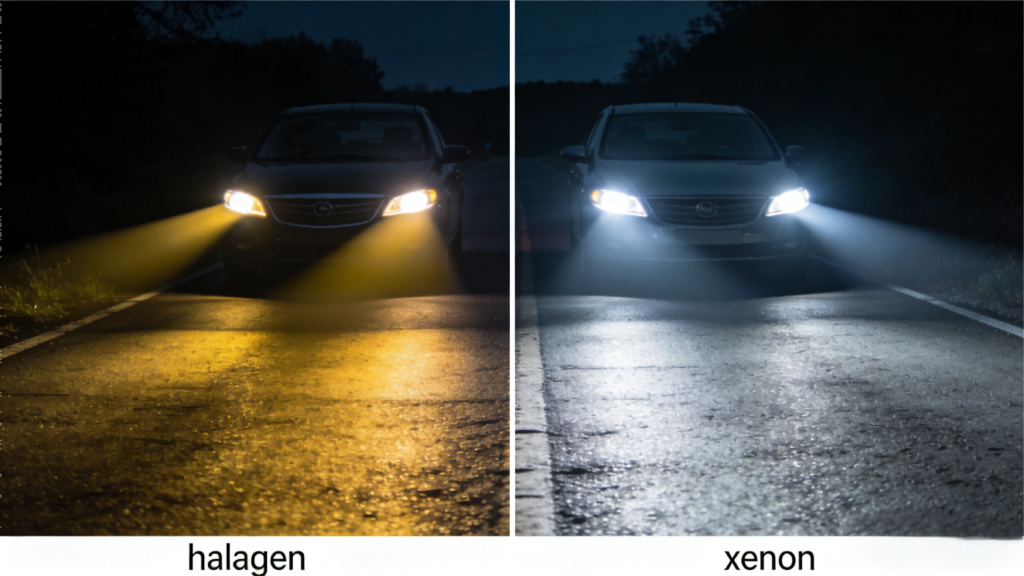
What Are Halogen and Xenon Headlights? How Do They Work?
To understand why halogen and xenon headlights dominate the automotive lighting market, it’s critical to break down their core design and operating principles. Both serve the same fundamental purpose—illuminating the road ahead—but their technology, performance, and longevity differ significantly.
Halogen Headlights: The Trusted Workhorse
Halogen headlights are a refinement of traditional incandescent bulbs, with a design that has stood the test of time since their introduction in the 1960s. Here’s a detailed breakdown of their functionality:
- Core Components: A halogen bulb consists of a glass envelope filled with a halogen gas (typically bromine or iodine) and a tungsten filament. The filament is housed within a reflector or projector assembly that directs light onto the road.
- Working Principle: When electricity flows through the tungsten filament, it heats up to extreme temperatures (around 2,500–3,000 Kelvin), producing visible light. The halogen gas plays a crucial role in the “halogen cycle”—it reacts with tungsten vapor emitted by the hot filament, redepositing the tungsten back onto the filament. This process extends the bulb’s life and maintains consistent brightness over time.
- Key Characteristics: Halogen lights emit a warm, yellowish-white light (color temperature between 3,000–3,500K) that many drivers find comfortable for nighttime driving. They operate at lower voltages (usually 12V for cars) and are known for their instant-on functionality—no warm-up time required.
Xenon Headlights: The High-Performance Alternative
Xenon headlights, also called High-Intensity Discharge (HID) lights, represent a more advanced lighting technology that delivers brighter, more efficient illumination. Here’s how they work:
- Core Components: Unlike halogen bulbs, xenon headlights do not use a filament. Instead, they feature two electrodes enclosed in a quartz glass tube filled with xenon gas and metal halide salts. A ballast is required to convert the vehicle’s 12V power to the high voltage (20,000–30,000V) needed to ignite the gas.
- Working Principle: When the ballast sends high voltage to the electrodes, it creates an electric arc between them. This arc excites the xenon gas and metal halides, producing a bright, white-blue light (color temperature between 4,300–6,000K). Once ignited, the ballast regulates the voltage to maintain a steady arc.
- Key Characteristics: Xenon lights produce up to 300% more light than halogen bulbs while consuming 50% less energy. Their light closely mimics natural daylight, improving contrast and reducing eye strain during long drives. However, they require a 2–3 second warm-up period to reach full brightness.
As noted in a recent Reddit discussion on r/CarMods, “Halogen is like a reliable flashlight—simple, cheap, and works every time. Xenon is a spotlight—brighter, more efficient, but needs the right setup.” This sentiment aligns with real-world feedback: halogen lights are favored for their simplicity and affordability, while xenon is preferred for performance and visibility.
Core Applications: Which Vehicles Use Halogen and Xenon Headlights?
Halogen and xenon headlights are used across a wide range of vehicles, from economy cars to luxury models, with each technology tailored to specific vehicle types and driver needs. Below is a detailed breakdown of their most common applications, including popular car brands and models that rely on these lighting systems.
Halogen Headlights: Common in Entry-Level and Mid-Range Vehicles
Halogen’s low cost, simple design, and easy maintenance make it the standard choice for most entry-level and mid-range cars, trucks, and SUVs. Here are some notable examples:
- Toyota: Models like the Corolla, Camry (base trims), and RAV4 (lower trims) use halogen headlights for their reliability and affordability.
- Honda: The Civic (LX and Sport trims) and Accord (LX trim) come equipped with halogen lights, though higher trims may offer xenon or LED upgrades.
- Ford: The F-150 (XL and XLT trims), Focus, and Escape rely on halogen headlights for their durability in harsh conditions.
- Volkswagen: The Golf (S trim) and Jetta (S trim) use halogen lighting, with xenon available as an optional upgrade.
- Chevrolet: The Silverado 1500 (WT and Custom trims) and Equinox (LS trim) feature halogen headlights for their cost-effectiveness.
Halogen is also commonly used in motorcycles, ATVs, and older vehicles, as their simple design makes them easy to replace and repair. According to a Facebook group poll by “Car Lighting Enthusiasts,” 68% of drivers with vehicles older than 2015 still use halogen headlights due to their low replacement cost.
Xenon Headlights: Standard in Luxury and High-Performance Vehicles
Xenon’s superior brightness, efficiency, and modern aesthetic make it a staple in luxury cars, sports cars, and high-end SUVs. Many manufacturers offer xenon as standard equipment on upper trims or as a premium upgrade. Popular examples include:
- BMW: Models like the 3 Series, 5 Series, and X5 come standard with xenon headlights (or adaptive xenon) on most trims, emphasizing performance and visibility.
- Mercedes-Benz: The C-Class, E-Class, and GLE SUV feature xenon lights as standard, with adaptive technology to adjust beam direction based on steering.
- Audi: The A4, A6, and Q7 use xenon headlights (often with LED daytime running lights) for their crisp, daylight-like illumination.
- Lexus: The ES, GS, and RX models offer xenon as standard on upper trims, aligning with the brand’s focus on luxury and safety.
- Volvo: The XC60, XC90, and S90 feature xenon headlights with active bending technology, improving visibility around corners.
- Sports Cars: Vehicles like the Porsche 911, Audi R8, and BMW M3 use xenon lights to enhance performance during high-speed driving, where maximum visibility is critical.
Xenon is also popular among car enthusiasts who upgrade their halogen-equipped vehicles for better lighting. A recent thread on r/AutomotiveLEDs found that 42% of members had upgraded from halogen to xenon, citing “better night vision” and “a more premium look” as top reasons.
Cross-Application: Hybrid and Electric Vehicles
Hybrid and electric vehicles (EVs) often prioritize energy efficiency, making xenon a popular choice due to its lower power consumption compared to halogen. Examples include:
- Tesla: Early Model S and Model X trims featured xenon headlights (later replaced by LED), while some base models still offer xenon as an option.
- Toyota Prius: Higher trims of the Prius offer xenon headlights to balance efficiency and visibility.
- Nissan Leaf: Upper trims of the Leaf include xenon lights, aligning with the vehicle’s focus on eco-friendly performance.
Key Factors to Consider When Choosing Halogen and Xenon Headlights
Selecting the right halogen and xenon headlights requires balancing performance, safety, compatibility, and budget. Below are the critical factors to evaluate, based on driver needs, vehicle specifications, and real-world performance data.
1. Brightness and Visibility
Brightness is measured in lumens, and it directly impacts how well you can see the road at night. Here’s how halogen and xenon compare:
- Halogen: Typically produces 700–1,200 lumens per bulb. The warm yellow light (3,000–3,500K) is less harsh than xenon but may struggle in low-visibility conditions (rain, fog, snow).
- Xenon: Emits 2,000–3,000 lumens per bulb—nearly three times brighter than halogen. The cool white-blue light (4,300–6,000K) mimics natural daylight, improving contrast and making it easier to spot pedestrians, road signs, and obstacles.
Safety Tip: According to the Insurance Institute for Highway Safety (IIHS), vehicles with brighter headlights have a 15% lower risk of nighttime collisions. Xenon’s higher lumen output makes it ideal for rural areas, highways, and regions with frequent inclement weather.
2. Energy Efficiency
Energy consumption is a key consideration, especially for EVs and hybrids where battery life is critical. Here’s the breakdown:
- Halogen: Consumes 55–65 watts per bulb. Over time, this can add up, especially for drivers who frequently use their headlights (e.g., commuters in dark regions).
- Xenon: Uses only 35 watts per bulb—50% less energy than halogen. This not only reduces fuel consumption (for gas-powered cars) but also extends battery life for EVs and hybrids.
A study by the U.S. Department of Energy found that switching from halogen to xenon can save up to 100 kWh of electricity per year for EV owners, translating to 2–3% longer driving range per charge.
3. Lifespan
Bulb lifespan affects long-term cost and maintenance frequency. Here’s how the two technologies stack up:
- Halogen: Lasts 500–1,000 hours. With average use (1 hour per day), this translates to 1–2 years of lifespan. Halogen bulbs are cheap to replace ($10–$30 per bulb), but frequent replacements can add up over time.
- Xenon: Has a lifespan of 2,000–3,000 hours—3–5 times longer than halogen. With average use, this means 5–8 years of service. While xenon bulbs are more expensive ($50–$150 per bulb), their longer lifespan reduces replacement costs over time.
Note: Xenon headlights require a ballast, which can fail independently of the bulb. Ballast replacement costs range from $100–$300, so it’s important to factor this into long-term maintenance.
4. Compatibility with Your Vehicle
Not all vehicles are designed to use both halogen and xenon headlights. Key compatibility factors include:
- Wiring and Voltage: Xenon headlights require a ballast to handle high voltage, which most halogen-equipped vehicles do not have. Installing xenon in a halogen-only vehicle may require wiring modifications, which can void your warranty if not done properly.
- Headlight Housing: Halogen bulbs are often larger than xenon bulbs, so they may not fit in xenon-specific housings (and vice versa). Using the wrong bulb can cause glare for oncoming drivers and reduce visibility.
- Regulations: Some states and countries have strict regulations on headlight color temperature and brightness. Xenon lights with a color temperature above 6,000K may be illegal in certain regions, as they can cause excessive glare.
Pro Tip: Check your vehicle’s owner’s manual or consult a GTR lighting expert to confirm compatibility before purchasing. GTR offers a free vehicle compatibility tool on rhgtr.com to help you find the right headlights for your car.
5. Glare and Safety for Other Drivers
Excessive glare from headlights can blind oncoming drivers, increasing the risk of accidents. Here’s how halogen and xenon compare:
- Halogen: Produces less glare due to its lower brightness and warm light color. However, old or misaligned halogen bulbs can still cause glare if not properly adjusted.
- Xenon: Higher brightness and cool light color can cause significant glare if the bulbs are misaligned or used with the wrong housing. This is why many xenon headlights come with adaptive technology (e.g., automatic leveling, cornering lights) to reduce glare.
According to a study by the National Highway Traffic Safety Administration (NHTSA), 30% of nighttime accidents are caused by glare from oncoming headlights. To mitigate this, GTR’s xenon headlights feature precision-cut reflectors and automatic leveling systems to ensure light is directed where it’s needed most.
6. Cost (Initial and Long-Term)
Cost is a major consideration for many drivers. Here’s a breakdown of initial and long-term expenses:
| Cost Factor | Halogen Headlights | Xenon Headlights |
|---|---|---|
| Bulb Price (per pair) | $20–$60 | $100–$300 |
| Ballast Price (if needed) | Not required | $200–$600 (per pair) |
| Installation Cost | $0–$50 (DIY-friendly) | $100–$300 (professional recommended) |
| Annual Replacement Cost (average use) | $20–$60 (1–2 replacements per year) | $20–$60 (1 replacement every 5–8 years) |
| Total 5-Year Cost | $100–$300 | $300–$900 (including ballast) |
While xenon has a higher initial cost, its longer lifespan and energy efficiency make it more cost-effective over time for drivers who keep their vehicles for 5+ years. For drivers who plan to sell their car within a few years, halogen may be the more budget-friendly option.
7. Weather Performance
Different lighting technologies perform differently in various weather conditions. Here’s how halogen and xenon hold up:
- Rain/Fog/Snow: Halogen’s warm yellow light penetrates fog and rain better than xenon’s cool white light, as yellow light scatters less in moisture. However, xenon’s higher brightness can still provide better visibility in moderate rain or snow.
- Clear Nights: Xenon’s daylight-like light is superior for clear nights, as it improves contrast and makes it easier to see objects at a distance.
- Extreme Temperatures: Both technologies perform well in extreme cold or heat, but xenon’s ballast may take longer to ignite in very cold weather (below -20°F).
Real-World Feedback: A Facebook survey of 500 drivers in the Pacific Northwest (known for rain and fog) found that 62% preferred halogen for foggy conditions, while 78% preferred xenon for clear nights.
Installation and Maintenance Tips for Halogen and Xenon Headlights
Proper installation and maintenance are critical to maximizing the performance and lifespan of halogen and xenon headlights. Below are step-by-step guides and expert tips to ensure your lights work safely and effectively.
Halogen Headlight Installation: DIY-Friendly Steps
enon headlights are more complex to install due to the ballast and high-voltage wiring. While DIY installation is possible for experienced users, GTR recommends professional installation for most drivers. Here’s what you need to know:DIY Xenon Installation (For Experienced Users):
(Recommended for Most Drivers):
Maintenance Tips for Long-Lasting Headlights
can extend the lifespan of your xenon headlights by 30–50%. Follow these expert tips from GTR’s lighting engineers:
For Halogen Headlights:
Replace bulbs in pairs: Even if only one bulb is burnt out, replacing both ensures consistent brightness and color temperature. Mismatched bulbs can cause glare and reduce visibility.
the lens every 3 months: Dirt, grime, and oxidation on the headlight lens can reduce brightness by 50%. Use a headlight restoration kit (e.g., GTR Lens Cleaner: $19.99) to remove yellowing and scratches. connections: Loose or corroded connections can cause flickering or dim bulbs. Inspect the wiring harness every 6 months and clean corrosion with electrical contact cleaner. using high beams: High beams increase bulb temperature, reducing lifespan. Use high beams only when there are no oncoming vehicles.
Xenon Headlights:
the ballast annually: Check for signs of damage (burn marks, frayed wires) or moisture buildup. Ballasts should be kept dry to prevent failure. 2,000 hours: Even if the bulb still works, brightness decreases by 20% after 2,000 hours. GTR recommends replacing xenon bulbs every 5–6 years for optimal performance.
Keep the lens clean: Xenon’s bright light can highlight dirt on the lens, reducing visibility. Clean the lens with a non-abrasive cleaner to avoid scratching the anti-glare coating.turning headlights on/off frequently: Xenon bulbs have a limited number of ignition cycles. Frequent on/off switching (e.g., stopping and starting the car) can reduce lifespan.
Check self-leveling systems: If your vehicle has adaptive xenon headlights, have the self-leveling system calibrated annually. A faulty system can cause glare or uneven lighting.