เมื่อคุณยืนอยู่ในแผนกอะไหล่รถยนต์หรือเรียกดูแคตตาล็อกออนไลน์ ปริมาณของตัวเลือกไฟส่องสว่างอาจทำให้คุณรู้สึกท่วมท้น เป็นเวลาหลายทศวรรษที่แสงสีเหลืองมาตรฐานของหลอดฮาโลเจนเป็นตัวเลือกเดียวที่มีอยู่ ทุกวันนี้ ภูมิทัศน์ของไฟส่องสว่างยานยนต์ได้เปลี่ยนแปลงไปอย่างมาก หากคุณกำลังมองหาการอัพเกรดความสวยงามและประสิทธิภาพในเวลากลางคืนของรถคุณ การทำความเข้าใจความแตกต่างระหว่าง ซ่อนไฟหน้า, หลอดฮาโลเจน และหลอด LED สมัยใหม่ เป็นสิ่งสำคัญ. คู่มือฉบับนี้จะพาคุณไปสำรวจลึกถึงข้อมูลทางเทคนิค ช่วยให้คุณตัดสินใจได้ ซึ่งอะไรที่สว่างกว่ากัน ซ่อนอยู่หรือเปล่งแสงออกมา, และทำไมเทคโนโลยี Xenon แบบ “เก่า” อาจยังคงเป็นตัวเลือกที่เหนือกว่าสำหรับความต้องการในการขับขี่เฉพาะของคุณ.
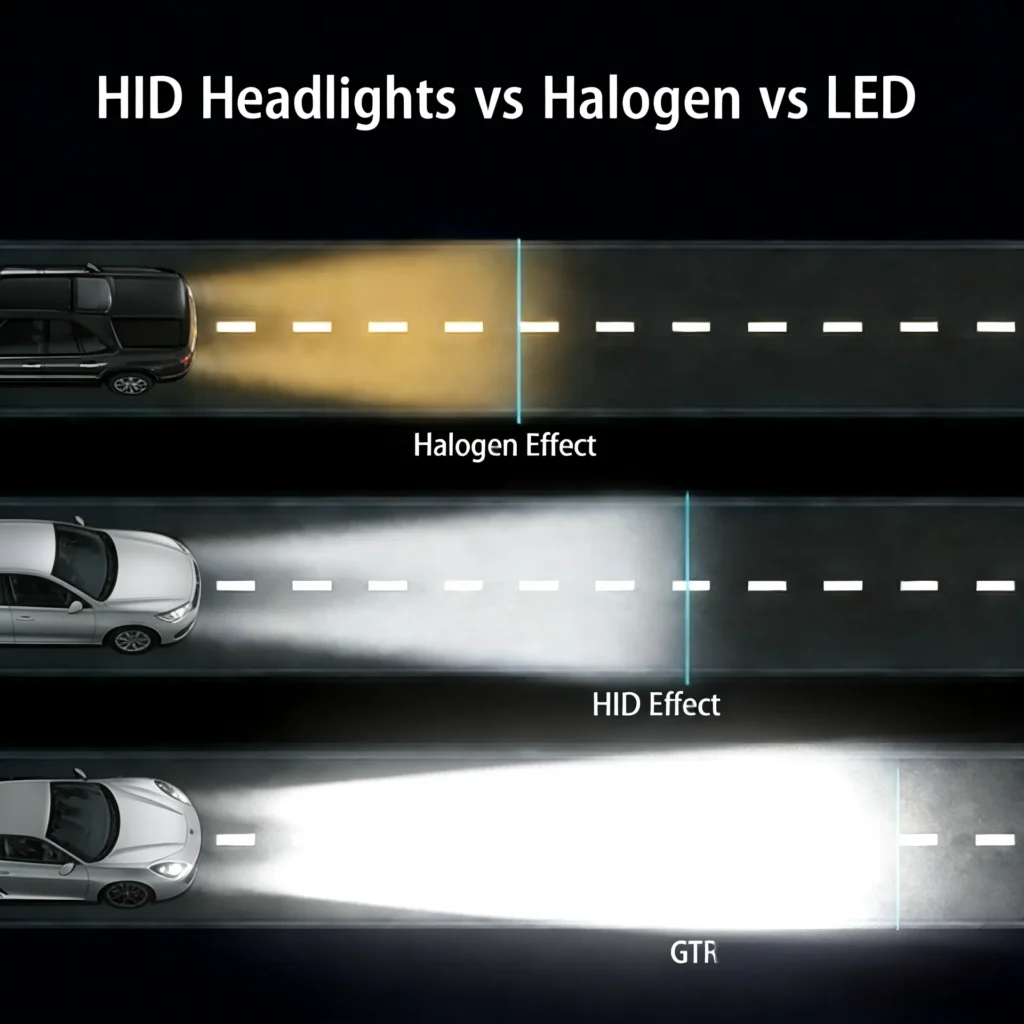
ผู้ท้าชิง: การกำหนดเทคโนโลยี
ก่อนทำการซื้อ ควรทำความเข้าใจก่อนว่าเกิดอะไรขึ้นภายในโคมไฟหน้าของคุณ วิธีการสร้างแสงสว่างเป็นตัวกำหนดทุกอย่างตั้งแต่ความสว่างไปจนถึงอายุการใช้งาน.
1. ฮาโลเจน: มาตรฐานดั้งเดิม
ไฟฮาโลเจนทำงานคล้ายกับหลอดไส้ที่ใช้ในบ้านมานานกว่าศตวรรษ โดยใช้ไส้หลอดทังสเตนภายในแคปซูลแก้วที่บรรจุแก๊สฮาโลเจน เมื่อกระแสไฟฟ้าไหลผ่านไส้หลอด ไส้หลอดจะร้อนขึ้นและเปล่งแสงออกมา แม้ว่าจะเชื่อถือได้และราคาถูก แต่ไฟฮาโลเจนมีชื่อเสียงในด้านประสิทธิภาพต่ำ โดยเปลี่ยนพลังงานเป็นความร้อนมากกว่าแสง.
2. ไฟหน้า HID (การปล่อยประจุไฟฟ้าความเข้มสูง)
มักเรียกกันว่า ไฟซีนอน, ซ่อนไฟหน้า ทำงานบนหลักการที่แตกต่างอย่างสิ้นเชิง ไม่มีไส้หลอด แต่แสงถูกสร้างขึ้นโดยอาร์คไฟฟ้าที่กระโดดระหว่างขั้วไฟฟ้าสองตัวภายในแคปซูลควอตซ์ที่เต็มไปด้วยก๊าซซีนอนและเกลือโลหะ ซึ่งต้องการ “บัลลาสต์” เพื่อควบคุมแรงดันไฟฟ้า—จุดอาร์คด้วยแรงดันไฟฟ้าสูงแล้วทำให้เสถียร กระบวนการนี้ให้แสงสว่างที่เข้มข้นกว่ามากเมื่อเทียบกับฮาโลเจน.
3. LED (ไดโอดเปล่งแสง)
LED เป็นสารกึ่งตัวนำที่ปล่อยแสงออกมาเมื่อมีกระแสไฟฟ้าไหลผ่าน พวกมันเปิดใช้งานได้ทันทีและมีประสิทธิภาพสูง อย่างไรก็ตาม ในขณะที่ไดโอดยังคงเย็นอยู่ ฐานจะสร้างความร้อนขึ้น ซึ่งจำเป็นต้องมีระบบระบายความร้อนที่ซับซ้อน (พัดลมหรือฮีตซิงค์).
HID เทียบกับฮาโลเจน เทียบกับ LED: การประลองทางเทคนิค
เพื่อช่วยให้คุณนำทาง ไฮด vs ฮาโลเจน vs เลด การอภิปราย, เราได้รวบรวมการเปรียบเทียบปัจจัยสำคัญที่มีอิทธิพลต่อประสบการณ์ของผู้ขับขี่. ผู้ที่ชื่นชอบในฟอรัมมักถกเถียงเกี่ยวกับตัวชี้วัดเหล่านี้ โดยเฉพาะอย่างยิ่งการเน้นที่ “การโยน” (ระยะทาง) ของแสง.
| คุณสมบัติ | ฮาโลเจน | ไฟหน้า HID | ไฟหน้า LED |
|---|---|---|---|
| ลูเมน (ความสว่าง) | 700 – 1,200 ลูเมน | 3,000 – 5,000 ลูเมน | 2,500 – 4,500 ลูเมน |
| อุณหภูมิสี | 3200K (เหลือง) | 4300K – 8000K (ขาว/น้ำเงิน) | 6000K – 6500K (ขาวสดใส) |
| อายุขัย | 500 – 1,000 ชั่วโมง | 2,000 – 3,000 ชั่วโมง | 10,000 – 50,000 ชั่วโมง |
| การใช้พลังงาน | 55 วัตต์ (สูง) | 35 วัตต์ (ประสิทธิภาพสูง) | 20 – 40 วัตต์ (มีประสิทธิภาพสูงมาก) |
| เวลาเริ่มต้น | ทันที | 3-10 วินาที (อุ่นเครื่อง) | ทันที |
| โฟกัสรูปแบบแสง | มาตรฐาน | ยอดเยี่ยมในโปรเจคเตอร์ | ตัวแปร (ขึ้นอยู่กับตำแหน่งการวางชิป) |
การตอบคำถามใหญ่: อะไรสว่างกว่ากัน HID หรือ LED?
นี่อาจเป็นคำถามที่เราได้รับบ่อยที่สุด จีทีอาร์. คำตอบไม่ใช่แค่ “ใช่” หรือ “ไม่ใช่” เพราะมันขึ้นอยู่กับตัวโคมไฟหน้า.
โดยทั่วไปแล้ว ในแง่ของปริมาณลูเมนดิบที่ออกมาจากแหล่งกำเนิด แสงคุณภาพสูง ซ่อนไฟหน้า มักจะเหนือกว่า LED ระดับผู้บริโภคทั่วไป HID มักจะผลิตแสงสว่างประมาณ 3,200 ถึง 3,500 ลูเมนต่อหลอดอย่างเสถียร ในขณะที่ LED บางรุ่นอ้างตัวเลขที่สูงกว่า แต่ลูเมนที่มีประสิทธิภาพ (ที่ตกกระทบกับถนนจริง) อาจต่ำกว่าเนื่องจากปัญหาการระบายความร้อนหรือการโฟกัสแสงที่ไม่ดี.
- ข้อได้เปรียบของการขว้าง: โดยทั่วไปแล้ว HIDs จะมี “การกระจายแสง” ที่ดีกว่า หากคุณขับรถบนทางหลวงที่ยาวและไม่มีไฟส่องสว่าง HIDs ที่ติดตั้งในโคมโปรเจคเตอร์ที่เหมาะสมอาจส่งแสงได้ไกลกว่า LEDs ซึ่งมักจะมีลักษณะการกระจายแสงที่กว้างกว่าและให้แสงที่กระจายตัวมากกว่าแต่ระยะทางสั้นกว่า.
- ปัจจัยแสงจ้า: เนื่องจาก HID เป็นแหล่งกำเนิดแสงแบบรอบทิศทาง (ส่องสว่าง 360 องศา) จึงทำงานได้ดีเยี่ยมในตัวเครื่องโปรเจคเตอร์ที่สามารถจับแสงทั้งหมดและโฟกัสได้ ในขณะที่ LED จะปล่อยแสงออกมาจากสองด้านเฉพาะ ซึ่งอาจทำให้เกิดจุดมืดได้หากหลอดไฟไม่ได้ “ตั้งเวลา” (จัดแนว) อย่างถูกต้อง.
ปัจจัยสำคัญในการซื้อ: วิธีการเลือก
หากคุณตัดสินใจที่จะเลิกใช้ฮาโลเจน นี่คือสิ่งที่คุณต้องมองหาเมื่อเลือกชุด HID.
1. แอลซี vs. ดีซี บัลลาสต์
ชุดราคาถูกใช้บัลลาสต์ DC (กระแสตรง) ซึ่งมักเกิดการกระพริบและมีอายุการใช้งานของหลอดไฟสั้น ชุดคุณภาพสูง เช่น ชุดที่ออกแบบโดยผู้นำในอุตสาหกรรม ใช้บัลลาสต์ดิจิตอล AC (กระแสสลับ) บัลลาสต์ AC ให้กระแสไฟฟ้าที่เสถียรแก่หลอดไฟ ทำให้ได้สีที่สม่ำเสมอและป้องกัน “เอฟเฟกต์สโตรบ” ที่น่ากลัว”
2. อุณหภูมิสี (เคลวิน)
อย่าสับสนระหว่างสีกับความสว่าง ค่าเคลวินที่สูงกว่าไม่ได้หมายความว่าไฟจะสว่างมากขึ้น มักจะหมายถึง น้อยกว่า แสงที่สามารถใช้ได้.
- 4300K: มาตรฐาน OEM. สีแสงสว่างตามธรรมชาติ. ความชัดเจนสูงสุด.
- 5000K – 6000K: ขาวบริสุทธิ์. ตัวเลือกที่ได้รับความนิยมมากที่สุดสำหรับลุคที่ทันสมัยโดยไม่ลดทอนประสิทธิภาพ.
- 8000K+: สีฟ้าอมเทา ความสว่างลดลงอย่างมาก ส่วนใหญ่เพื่อความสวยงาม.
3. ความเข้ากันได้กับ CANBUS
รถยนต์สมัยใหม่ (เช่น BMW, Dodge หรือ Audi) มีระบบคอมพิวเตอร์ที่ซับซ้อนซึ่งตรวจสอบหลอดไฟ หากคุณติดตั้งชุด HID ที่ใช้พลังงานน้อยกว่าหลอดฮาโลเจนเดิม รถอาจคิดว่าหลอดไฟขาดและแสดงสัญญาณเตือนบนแผงหน้าปัด โดยทั่วไปคุณจะต้องใช้ชุดที่มีตัวถอดรหัส CANBUS หรือ “ตัวยกเลิกข้อผิดพลาด” ที่รวมอยู่ในบัลลาสต์.
การติดตั้งและบำรุงรักษาระบบ HID
ติดตั้ง ซ่อนไฟหน้า มีความซับซ้อนมากกว่าการเปลี่ยนหลอดไฟธรรมดาเนื่องจากมีบัลลาสต์.
- การติดตั้งบัลลาสต์: คุณต้องหาตำแหน่งที่ปลอดภัยและแห้งในช่องเครื่องยนต์เพื่อติดตั้งบัลลาสต์ ควรอยู่ห่างจากความร้อนสูงหรือชิ้นส่วนที่เคลื่อนไหว.
- การเดินสายไฟ: ชุดส่วนใหญ่เป็นแบบ “Plug and Play” หมายความว่าสามารถเชื่อมต่อกับสายไฟจากโรงงานได้โดยตรง อย่างไรก็ตาม สำหรับรถยนต์รุ่นเก่าที่มีสายไฟอ่อน แนะนำให้ใช้ชุดสายไฟรีเลย์เพื่อดึงพลังงานจากแบตเตอรี่โดยตรง.
- ระยะเวลาการเบิร์นอิน: หลอดไฟ HID ใหม่อาจเปลี่ยนสีเล็กน้อยในช่วง 100 ชั่วโมงแรกของการใช้งาน นี่เป็นกระบวนการทางเคมีปกติที่เรียกว่า “การเปลี่ยนแปลงสี”
ทำไม GTR ถึงโดดเด่นในตลาด HID
ในขณะที่ผู้ผลิตหลายรายได้ละทิ้งการพัฒนา HID เพื่อหันไปใช้ LED ทั่วไป, จีทีอาร์ ยังคงพัฒนาเทคโนโลยีอันทรงพลังนี้อย่างต่อเนื่อง ที่ GTR Lighting เราเข้าใจดีว่าสำหรับยานพาหนะที่ใช้โปรเจคเตอร์จำนวนมาก HID ยังคงเป็นราชาแห่งการมองเห็นในระยะไกล.
บัลลาสต์ GTR ได้รับการออกแบบด้วยเทคโนโลยีการสตาร์ทเร็ว ช่วยลดเวลาในการอุ่นเครื่องที่เกี่ยวข้องกับระบบ HID รุ่นเก่า นอกจากนี้ หลอดไฟของเรายังถูกจัดตำแหน่งด้วยเลเซอร์เพื่อให้แน่ใจว่าตำแหน่งของอาร์คเลียนแบบตำแหน่งของไส้หลอดของหลอดฮาโลเจนดั้งเดิมได้อย่างสมบูรณ์แบบ ความแม่นยำนี้มีความสำคัญอย่างยิ่งในการรักษาเส้นตัดที่คมชัด เพื่อให้แน่ใจว่าคุณส่องสว่างบนถนนโดยไม่ทำให้รถที่สวนมาตาพร่า.
คำถามที่พบบ่อย: คำถามที่พบบ่อยเกี่ยวกับ HID
ไฟ HID ผลิตความร้อนมากเกินไปสำหรับตัวเรือนของฉันหรือไม่?
ที่จริงแล้ว หลอดไฟ HID ให้ความร้อนน้อยกว่าหลอดฮาโลเจน พื้นผิวของหลอดฮาโลเจนสามารถร้อนได้ถึง 900°F ในขณะที่แคปซูลควอตซ์ของหลอด HID จะเย็นกว่า อย่างไรก็ตาม ฐานของหลอดไฟจะอุ่นขึ้นบ้าง แต่แทบจะไม่ทำให้ตัวโคมไฟหน้าแบบสมัยใหม่เสียหาย.
หลอดไฟ HID ผิดกฎหมายหรือไม่?
ขึ้นอยู่กับเขตอำนาจศาลและการนำไปใช้ การติดตั้ง HIDs แบบย้อนกลับเข้าไปในโคมไฟที่ออกแบบมาสำหรับฮาโลเจน (ถ้วยสะท้อนแสง) อาจทำให้เกิดแสงจ้าที่เป็นอันตรายและผิดกฎหมายในหลายภูมิภาค HIDs ควรใช้ในเลนส์โปรเจคเตอร์ที่ออกแบบมาสำหรับ HIDs โดยเฉพาะ.
ฉันสามารถติดตั้ง HID ในไฟตัดหมอกได้ไหม?
ใช่ แต่ควรระมัดระวังเรื่องอุณหภูมิสี สำหรับหมอก แนะนำให้ใช้ 3000K (สีเหลือง) เพราะสามารถทะลุผ่านหมอกได้ดีกว่าแสงสีขาว ซึ่งจะสะท้อนกับหยดน้ำ.
บัลลาสต์มีอายุการใช้งานนานเท่าไร?
บัลลาสต์ดิจิตอลคุณภาพสูงสามารถใช้งานได้ตลอดอายุการใช้งานของยานพาหนะ (มากกว่า 3000 ชั่วโมง) บัลลาสต์อนาล็อกราคาถูกอาจเสียภายในไม่กี่เดือน.
ทำไมไฟ HID หนึ่งดวงของฉันเป็นสีชมพู?
เมื่อหลอดไฟ HID ใกล้จะหมดอายุการใช้งาน ส่วนผสมทางเคมีจะเสื่อมสภาพ ทำให้แสงเปลี่ยนเป็นสีชมพูหรือสีม่วง (ปรากฏการณ์ที่เรียกว่า “การหมุนรอบ”) ซึ่งบ่งชี้ว่าถึงเวลาที่ต้องเปลี่ยนหลอดไฟทั้งคู่.