Introduction: Understanding DOT LED Headlights and Their Importance
Driving at night or in poor weather conditions demands reliable, high-performance lighting. For decades, halogen bulbs were the standard, but the automotive lighting world has been revolutionized by Light Emitting Diode (LED) technology. LEDs offer superior brightness, longer lifespans, and a modern aesthetic. However, not all LED upgrades are created equal, and navigating the legal landscape is crucial for safety and compliance. This is where the term “DOT approved” becomes paramount. Understanding DOT LED headlights is not just about buying a brighter light; it’s about ensuring your vehicle’s lighting is safe, legal, and engineered to perform correctly on public roads. Choosing the right solution protects you, your passengers, and other drivers, while unlocking the full potential of modern automotive lighting.
What Does “DOT Approved” Actually Mean for LED Headlights?
The phrase “DOT Approved” is widely used but often misunderstood. The U.S. Department of Transportation (DOT) does not “approve” individual products in a pre-market sense. Instead, it sets the safety standards that automotive equipment must meet. For headlights, the relevant standard is Federal Motor Vehicle Safety Standard (FMVSS) No. 108. When a headlight assembly is marketed as “DOT Approved” or “DOT Compliant,” it signifies that the manufacturer certifies the product meets all the requirements of FMVSS 108.
These requirements are extensive and specific. They govern everything from the intensity and distribution of the light beam (the pattern) to the physical durability of the housing and its resistance to moisture and corrosion. Most critically, the standard dictates the precise cut-off line for low beams to prevent glare for oncoming traffic. A true DOT-compliant headlight assembly is engineered from the ground up as a complete optical system—the housing, lens, reflector/projector, and light source are all designed to work in unison to produce a safe, controlled beam. You will often find a “DOT” marking permanently etched or molded into the lens of compliant assemblies, which is the manufacturer’s self-certification of compliance.
It’s vital to understand that this certification applies to the entire headlight assembly. The DOT regulates the headlamp as a device, not the bulb inside it as a separate component. This distinction is the root of much confusion and leads us to the most critical point of clarity for anyone considering an LED upgrade.
The Critical Difference: DOT-Compliant Assemblies vs. LED Bulb Replacements
This is the single most important concept to grasp when shopping for LED headlights. The legality and performance of your upgrade hinge entirely on this difference.
DOT-Compliant LED Headlight Assemblies
These are complete replacement units. You remove your entire factory headlight housing and install a new, sealed assembly that integrates LED technology. The LEDs are fixed in the optimal position relative to the lens and reflector/projector bowl, which is engineered to cast the correct DOT beam pattern. Examples from the knowledge base, like the “9 Inch 120W DOT Approved LED Headlights with Halo Ring DRL,” are these types of complete assemblies. They are designed for specific vehicle applications (e.g., for a Jeep JL Wrangler) to ensure proper fitment and beam alignment. These are the only type of LED headlight conversion that is unequivocally designed to be street-legal for use on public roads in the United States.
LED Bulb Replacements (Retrofit Bulbs)
These are bulbs designed to plug into your existing halogen headlight housing. They are marketed as “plug-and-play” upgrades. However, as stated clearly in the knowledge base: “There is currently no provision within these regulations to legally replace halogen headlamp bulbs with retrofit LED bulb replacements.” The reason is physics. Halogen housings are designed to focus light from a tiny, cylindrical filament in a specific location. An LED bulb has multiple diodes placed in different locations. Even with careful engineering, it is nearly impossible for an LED bulb to place its light-emitting surface in the exact same position as the original halogen filament. This results in an unfocused beam—often creating dangerous hotspots, dark spots, and excessive glare that blinds other drivers, even on low beam.
While some LED bulb manufacturers may claim their products are “DOT-compliant,” this is typically referring to the bulb’s construction materials or connectors, not its legal use in a halogen housing for headlights. As one source bluntly puts it: “The short answer is no, they don’t exist” in reference to DOT-certified LED replacement bulbs for halogen housings. For fog lights, the rules are different, as fog lamps are not federally regulated, making DOT-compliant LED fog light bulbs a valid and legal option.
Key Benefits of Upgrading to DOT-Compliant LED Headlight Assemblies
Choosing a full DOT-compliant LED assembly over a simple bulb swap or sticking with halogens delivers a suite of compelling advantages:
- Guaranteed Legal Compliance & Safety: This is the foremost benefit. You eliminate the risk of being ticketed for non-compliant lighting or, more importantly, causing an accident due to poor beam pattern. You drive with confidence knowing your lights meet federal safety standards.
- Superior Beam Pattern and Visibility: The light output is engineered for optimal use. You get a sharp, even cut-off with bright, uniform illumination where you need it—on the road ahead—without scattering light into the eyes of oncoming traffic. This dramatically improves your ability to see lane markings, road debris, and wildlife at night.
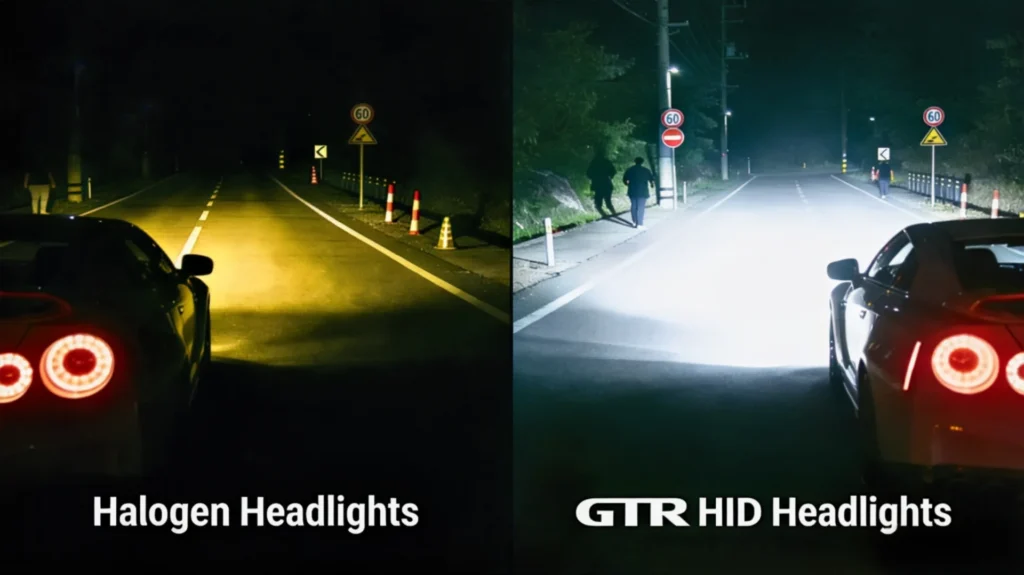
- Massively Increased Brightness and Clarity: Modern LED assemblies produce a whiter, more daylight-like light (often in the 6000K-6500K color temperature range) with significantly higher lumen output than halogens. This improves contrast and reduces eye strain during long drives.
- Enhanced Durability and Lifespan: LED assemblies have no fragile filaments. They are resistant to vibration and impacts. With lifespans often rated at 30,000 hours or more, they can realistically last the lifetime of your vehicle, eliminating the recurring cost and hassle of bulb replacements.
- Modern Aesthetic and Design Features: Full assemblies allow for integrated styling, such as halo Daytime Running Lights (DRL), sleek black or chrome housings, and projector-style optics that give your vehicle a custom, high-end look while remaining fully functional.
- Plug-and-Play Installation (Typically): High-quality vehicle-specific assemblies are designed to connect directly to your factory wiring harnesses and mount using original hardware, making the installation process straightforward.
How to Choose the Right DOT LED Headlights for Your Vehicle
Selecting the perfect DOT LED headlight assembly involves more than just picking the brightest option. Follow this guide to ensure a successful upgrade.
1. Confirm Exact Fitment
This is non-negotiable. Headlight shapes and mounting points are unique to each vehicle model and year. Use the selector tools provided by reputable retailers. As shown in the knowledge base, you’ll typically need to provide your vehicle’s Year, Make, Model, and Trim to see compatible products. An assembly made for a Jeep Wrangler JK (2007-2018) will not fit a Jeep JL (2018-present), for example.
2. Verify DOT Compliance
Look for clear, unambiguous statements from the manufacturer that the complete assembly is DOT compliant. The product description should explicitly state it meets FMVSS 108 standards. Look for the DOT symbol in product images. Be wary of products that only say “DOT” on the bulb itself or use vague language like “DOT style.”
3. Understand the Specifications
- Beam Type: Ensure the assembly provides both high and low beams. Most modern LED assemblies do this seamlessly within the same unit.
- Power (Watts) & Brightness (Lumens): While not a perfect measure, higher lumens generally indicate greater light output. Compare the raw lumen count, but remember a compliant beam pattern is more important than raw power.
- Color Temperature: Measured in Kelvins (K). 6000K-6500K is a pure, cool white that offers excellent clarity. Some may prefer a slightly warmer 5000K for better performance in fog or rain.
- Construction: Look for features like polycarbonate lenses (impact-resistant), aluminum alloy housings (for heat dissipation), and IP67 or higher waterproof ratings.
4. Consider Additional Features
Do you want integrated halo rings for DRLs? Switch-back turn signals? These features add style and functionality but ensure they are integrated into a compliant primary beam system.
5. Purchase from a Reputable Source
Buy from established automotive lighting specialists or reputable online retailers that provide detailed product information, fitment guarantees, and customer support. This ensures you get a quality product and assistance if needed.
A Step-by-Step Guide to Installing DOT LED Headlight Assemblies
Installation is generally straightforward for vehicle-specific assemblies. Always consult the instructions provided with your specific kit first. This is a general guide.
Tools You’ll Likely Need: Socket set, screwdrivers (Phillips and flathead), trim removal tools, Torx bits (vehicle-dependent), and possibly a panel clip remover.
Step 1: Preparation and Safety
Park your vehicle on a level surface, turn off the engine, and engage the parking brake. Disconnect the negative terminal of your vehicle’s battery to prevent any electrical shorts or accidental activation of the lights during installation.
Step 2: Access the Headlight Assembly
This varies greatly by vehicle. For some trucks and Jeeps, you may access the headlight from the front by simply removing a bezel or grille. For many modern vehicles, you will need to open the hood and potentially remove the front bumper cover or inner fender liners to access mounting bolts. Use trim tools carefully to avoid damaging clips or paint.
Step 3: Remove the Factory Headlight
Once accessible, locate the main electrical connector on the back of the headlight and disconnect it. There will be several mounting bolts or clips securing the assembly to the vehicle’s frame. Remove these, keeping all hardware organized. Gently pull the entire headlight assembly out from the front of the vehicle.
Step 4: Install the New DOT LED Assembly
Position the new LED headlight into the mounting location. Secure it using the provided or original hardware, but do not fully tighten yet. Reconnect the main electrical connector. Many kits include adapters for DRL or halo functions—connect these as per the instructions. Often, these will tap into a fuse box or side marker light for power.
Step 5: Align and Secure
Before final tightening, perform a preliminary beam alignment. Turn on the headlights (reconnect the battery temporarily if needed) and check that the beam pattern is level. Once satisfied, securely tighten all mounting hardware.
Step 6: Final Reassembly and Aiming
Reinstall any bumper covers, grilles, or trim you removed. The final, crucial step is professional headlight aiming. Even with a perfectly mounted assembly, the beams need to be vertically and horizontally aligned to your vehicle’s specific ride height. This can be done against a wall using instructions in your vehicle’s manual, but for optimal accuracy and legality, have the alignment checked by a professional mechanic or body shop. This ensures maximum visibility and zero glare for other drivers.
After installation, test all functions: low beams, high beams, DRLs, and turn signals (if equipped). Enjoy your new, safer, and more powerful view of the road.
Common Myths and Misconceptions About LED Headlight Legality
The world of automotive lighting is rife with confusion, often fueled by marketing claims and online forums. Before making a purchase, it’s critical to separate fact from fiction to ensure you stay safe and legal on the road.
Myth 1: “DOT-Approved LED Bulbs” Are a Thing
This is perhaps the most pervasive and dangerous myth. The U.S. Department of Transportation (DOT) does not certify or approve individual LED replacement bulbs for use in halogen headlight housings. The certification applies to the entire headlight assembly as a sealed unit. When a product listing claims a “DOT-approved bulb,” it is either misrepresenting a bulb designed for a certified assembly or, more commonly, misusing the term entirely. The federal regulation (FMVSS 108) has no provision for retrofitting halogen housings with LED bulbs, making such swaps technically non-compliant for street use regardless of packaging claims.
Myth 2: If It Fits and Lights Up, It’s Legal
Legality is not about physical fitment or function alone; it’s about compliance with safety standards. A halogen reflector or projector bowl is engineered with a specific filament location in mind to create a safe, focused beam pattern. Swapping in an LED bulb, with its different size, shape, and light-emitting points, scatters light. This creates hotspots, dark spots, and, most problematically, dangerous glare for oncoming traffic. While it may be brighter for you, it compromises everyone else’s safety, which is why this modification fails to meet legal standards.
Myth 3: The “For Off-Road Use Only” Label is Just a Formality
Many aftermarket LED bulbs carry this disclaimer, and drivers often ignore it, thinking it’s a legal loophole. In reality, it’s a critical liability statement. Using those bulbs on public roads means you are operating equipment explicitly not designed for street use. In the event of an accident, this could be grounds for negligence, and a police officer can issue a citation for improper equipment. The label is a clear admission that the product does not comply with DOT regulations for highway use.
Myth 4: All Complete LED Headlight Assemblies Are DOT Compliant
While the path to legality is through a complete assembly, not all assemblies are created equal. Some manufacturers may produce units without proper testing or certification. A legitimate DOT LED headlights assembly will have the “DOT” or “SAE” marking permanently molded or etched into the lens, not just on the box or a sticker. This marking indicates the manufacturer certifies that the unit meets all applicable federal standards. Always look for this physical mark on the product itself.
Myth 5: State Inspections Don’t Check for This
While enforcement varies, awareness is growing. States with annual safety inspections are increasingly cracking down on improper LED conversions because inspectors are trained to look for compliance markings and proper beam patterns. Even in non-inspection states, law enforcement can pull you over for excessive glare or improperly colored lights (e.g., blue-ish high-beams used as low-beams), leading to fines and a mandate to revert to legal equipment.
Spotlight on Top Applications: Jeeps, Trucks, and Popular Models
The demand for superior lighting is particularly high among owners of Jeeps, trucks, and SUVs, who often drive in challenging conditions. Fortunately, the aftermarket has responded with a wide range of DOT-compliant solutions tailored for these popular platforms.
Jeep Wrangler & Gladiator (JK, JL, JT)
Jeep owners are among the biggest beneficiaries of the modern DOT LED assembly market. The classic 7-inch round headlight (on older TJ, LJ, and JK models) and the 9-inch round light (on newer JL Wranglers and JT Gladiators) have countless upgrade options. These complete assemblies are direct replacements for the stock sealed-beam or halogen units. They often feature integrated halo rings that serve as stylish Daytime Running Lights (DRLs), along with robust designs that maintain the Jeep’s iconic look while dramatically improving light output and pattern clarity for both trail and street. The plug-and-play nature makes it one of the most impactful and legally sound mods a Jeep owner can make.
Full-Size Trucks: Ford F-Series, Chevy Silverado/GMC Sierra, Ram
For truck owners who tow, haul, or drive long distances at night, upgraded lighting is a safety imperative. Modern DOT-compliant assemblies for these trucks are engineered to fit precisely into the factory headlight bucket, often replicating the OEM style with advanced LED projectors. They provide a massive improvement over the dim, scattered output of many factory halogen setups. Additionally, the fog light market for trucks is rich with DOT-compliant options. Since fog lights are not federally regulated (but must comply with state laws), many high-quality LED fog light kits are designed with proper cutoffs to prevent glare, making them a completely legal and functional upgrade to complement the headlights.
Popular SUVs and Crossovers
The trend extends to mainstream SUVs like the Toyota 4Runner, Ford Explorer, Honda CR-V, and Jeep Grand Cherokee. As these vehicles age, their plastic headlight lenses can degrade, and their halogen output feels outdated. Replacement with a new, DOT-compliant LED assembly solves both problems: it provides crystal-clear lenses and modern LED lighting in one package. This is often more cost-effective and safer than attempting to restore old lenses and swap in illegal bulbs.
The key takeaway for all these applications is specificity. The products that ensure a legal beam pattern and fit are those designed as complete units for a specific vehicle’s make, model, and year. This guarantees the housing geometry and mounting points align correctly to work with the vehicle’s reflectors or projectors as a certified system.
Maintenance and Care for Your DOT LED Headlights
While LED headlight assemblies are famously durable and long-lasting, proper care ensures they perform at their peak for years and maintain their like-new appearance.
Keeping Lenses Clean and Clear
The polycarbonate lenses on LED assemblies are resistant to UV yellowing but can still accumulate road grime, oxidation, and minor scratches over time. Clean them regularly with a pH-neutral automotive soap and water. Avoid harsh chemicals or abrasive cloths. For deeper cleaning or to remove light haze, use a dedicated plastic headlight restoration kit, applying it by hand—power tools can be too aggressive for the lens’s anti-glare coating. Applying a UV-protectant sealant after cleaning will help preserve clarity.
Ensuring Proper Electrical Connections
Long-term reliability hinges on a solid electrical connection. Periodically check the connectors at the back of the headlight assembly, especially if you live in a region with harsh winters or extreme temperature swings. Look for any signs of corrosion or moisture ingress. Ensure the rubber weather seal or dust cap is securely in place to protect the connector and driver components. A dielectric grease application during installation can prevent future corrosion.
Verifying Alignment
Headlight aim can shift over time due to normal suspension settling, changes in load, or minor impacts. Once or twice a year, or after adjusting your suspension, take a moment at night to check your beam pattern against a flat wall. A sudden change in where your beams hit the road, or an increase in flashes from oncoming drivers, is a sign your alignment needs adjustment. Proper alignment is not just about maintenance; it’s a ongoing safety requirement.
Addressing Condensation
A small amount of temporary condensation inside the lens during a sudden temperature change can be normal and should clear on its own. However, persistent pooling of water or large droplets indicate a broken seal. While many assemblies are marketed as waterproof (IP67 rating), physical damage can compromise this. If moisture persists, contact the manufacturer, as the unit may need to be resealed or replaced under warranty.
Summary of Key Points: Your Roadmap to Legal LED Lighting
Upgrading your vehicle’s lighting is one of the most rewarding modifications, but navigating the legal landscape is essential. Here is your consolidated guide to doing it right:
- The Legal Path is a Complete Assembly: For headlights, legality is achieved only by replacing the entire headlight unit with a DOT LED headlights assembly that bears the permanent DOT/SAE marking on its lens. This ensures the entire optical system—lens, reflector/projector, and light source—is engineered and certified as a single, compliant unit.
- Bulb Replacements Are Not Compliant: Plug-in LED bulbs designed to replace halogen bulbs in your existing housings are not legal for street use in the United States, regardless of marketing claims. They create unsafe glare and fail federal safety standards.
- Fog Lights Operate Under Different Rules: Fog lamps are not federally regulated, making DOT-compliant LED fog light upgrades a legal and excellent way to improve peripheral and low-light visibility, provided they are aimed correctly and comply with state color laws (typically white or amber).
- Vehicle-Specific Fit is Non-Negotiable: To guarantee proper beam focus and a hassle-free installation, always choose an assembly designed explicitly for your vehicle’s year, make, and model. This ensures correct fitment and optical alignment.
- Professional Aiming is the Final, Critical Step: Even a perfectly installed, certified assembly must be aimed correctly. Proper vertical and horizontal alignment maximizes your visibility while eliminating glare for other drivers, completing a safe and legal upgrade.
By following this roadmap, you invest not just in brighter light, but in safer driving for yourself and everyone sharing the road with you.
Frequently Asked Questions (FAQ) About DOT LED Headlights
Q: Are LED headlight bulbs illegal?
A: In the context of replacing halogen bulbs in your existing headlight housing, yes, they are not compliant with U.S. federal regulations (FMVSS 108) for use on public roads. They are considered “retrofit” bulbs and, by design, cannot replicate the exact light source characteristics of a halogen filament, leading to an non-compliant and unsafe beam pattern.
Q: How can I tell if my LED headlights are actually DOT approved?
A: Look for the marking on the product itself, not the box. A legitimate DOT-compliant headlight assembly will have the letters “DOT” or “SAE” permanently molded or etched into the front lens, usually on the periphery. This is the manufacturer’s self-certification that the unit meets all standards.
Q: Can I get a ticket for having LED bulbs in my halogen housings?
A: Absolutely. Law enforcement can issue citations for “improper equipment” or “glaring headlights.” This is more likely in states with vehicle safety inspections, but any officer can write a ticket if your lights are blinding other drivers or are an improper color.
Q: What’s the difference between “DOT Compliant” and “DOT Approved”?
A: In practical terms for consumers, they are often used interchangeably, but “DOT approved” is a slight misnomer. The DOT doesn’t “approve” products before sale; instead, manufacturers self-certify that their products comply with the DOT’s standards (FMVSS 108). “DOT compliant” is the more technically accurate term, meaning the product meets the standard’s requirements.
Q: I see DOT-compliant assemblies for my car, but they’re much more expensive than bulbs. Why?
A: You are paying for a complete engineered optical system, not just a light source. The cost includes complex reflector or projector optics, durable housing, integrated cooling, proper electrical drivers, and the rigorous testing required for certification. It’s a precision safety component, not a simple accessory.
Q: Will DOT LED headlights work with my vehicle’s automatic headlight leveling or adaptive lighting systems?
A: This depends entirely on the specific assembly. Some high-end OEM-style replacements are designed to integrate with these systems, but many basic aftermarket units are not. Always check the product specifications or contact the manufacturer directly to confirm compatibility with any advanced factory lighting features before purchasing.
Q: Are the halo rings (Angel Eyes) or other DRLs on these assemblies street legal?
A: If the assembly is DOT/SAE compliant as a whole, its integrated DRL function is included in that certification. However, when the vehicle is in motion, only white or amber lights are typically legal to the front. Ensure any multi-color RGB halos can be set to a static, legal color for street driving or are programmed to switch off while driving.