Introduction: The Ultimate Guide to 9006 Yellow Fog Light Bulbs
Driving in poor weather is an exercise in tension and uncertainty. Your high beams create a blinding wall of glare, and your standard white headlights seem to scatter uselessly into the mist. There is a proven solution, a simple upgrade that transforms your visibility and safety: the 9006 fog light bulb yellow. This comprehensive guide is designed to cut through the fog of misinformation and provide you with everything you need to know. We’ll explore the science behind amber light, break down the different bulb technologies available, and give you the practical knowledge to choose and install the perfect set for your vehicle. Whether you’re navigating coastal highways, mountain passes, or just want enhanced style and safety, understanding the power of yellow fog lights is your first step toward a clearer, more confident drive.
What Are 9006 Yellow Fog Lights? Bulb Types and Technology Explained
The 9006 is a specific bulb size, also known as an HB4. It’s a single-filament bulb commonly used for low-beam headlights and, more importantly for our discussion, fog lights on a vast array of cars, trucks, and SUVs. A “yellow” or “amber” 9006 bulb is engineered to produce light in a specific color temperature range, typically between 2600K and 3000K, which our eyes perceive as a deep yellow or golden hue. This isn’t just a colored lens or a tinted coating; the color is an intrinsic property of the light emitted by the bulb’s technology.
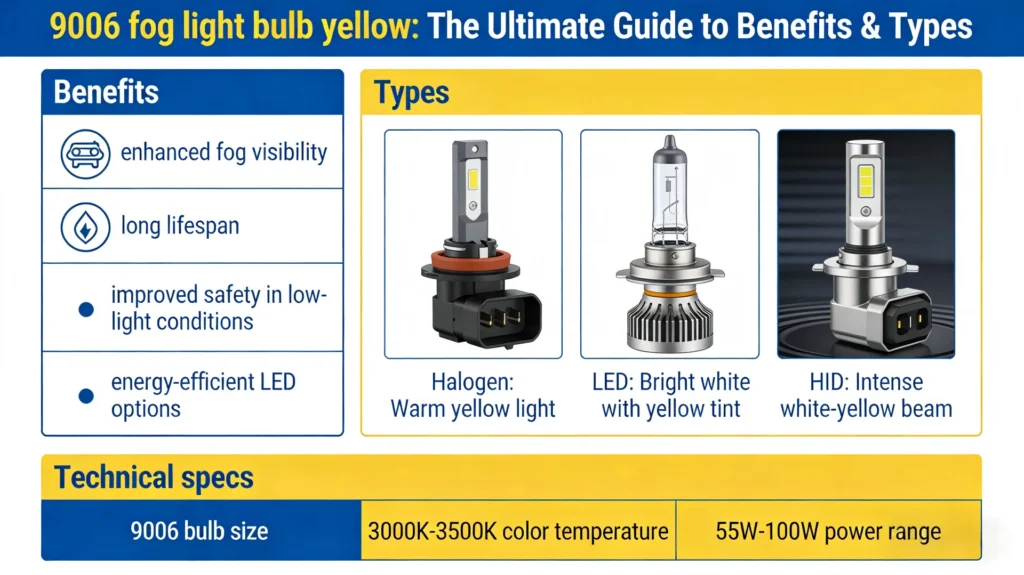
There are three primary technologies used to create yellow light in the 9006 form factor, each with distinct characteristics:
- Halogen Yellow: The most traditional type. These are essentially standard halogen bulbs with a yellow glass capsule or a blue coating that filters out cooler light, leaving a warmer yellow output. An example is the SYLVANIA 9006 FogVision, which is a trusted OEM-style bulb designed specifically “for fog use only.” They are affordable and legal but tend to have lower brightness and a shorter lifespan compared to newer tech.
- Xenon (HID) Yellow: These bulbs use a Xenon gas mixture and are often marketed as “Solar Yellow” or “Golden.” They operate at a higher intensity than halogen. As seen in the RECON XENON Solar Yellow bulbs, they claim to produce “up to 150% more usable light” than factory halogens at a 2600K color temperature. They offer a significant brightness boost over halogen but require the existing vehicle wiring and housing designed for halogen bulbs.
- LED Yellow: The modern performance choice. These bulbs use Light Emitting Diodes (LEDs) that are inherently tuned to emit light at a 3000K amber wavelength. They are not filtered; the light is natively yellow. Products like the 9006 HB4 LED Fog Light Bulbs with 3000K Amber Yellow boast high lumen outputs (e.g., 6000LM, 8000LM), extremely long lifespans (up to 50,000 hours), and much lower power draw. They are typically plug-and-play but may require additional resistors (CANbus decoders) for some vehicles to prevent dashboard error messages.
Understanding this technological landscape is crucial because the type of bulb you choose directly impacts performance, installation complexity, cost, and longevity.
The Science of Yellow Light: Why 3000K Amber Beats White in Fog
The preference for yellow fog lights isn’t an automotive fashion trend; it’s rooted in fundamental physics and human biology. White light from standard headlights has a full spectrum of colors and a short wavelength. When these short wavelengths hit the countless tiny water droplets in fog, rain, or snow, they scatter in all directions—a phenomenon known as Rayleigh scattering. This scattering creates that blinding “wall of light” effect, drastically reducing the light that actually reaches the road and reflecting back into your eyes, worsening glare.
Yellow light, specifically in the 3000K (Kelvin) amber range, has a longer wavelength. Longer wavelengths are less prone to this disruptive scattering. They cut through atmospheric particles more effectively, illuminating the road surface with less backscatter. Think of the difference between a laser pointer in fog (which scatters visibly) and a deep red safety light (which penetrates more cleanly).
Furthermore, the human eye has a complex response to different light colors. In low-light conditions, our eyes rely more on rod cells, which are more sensitive to blue-green light but also fatigue quickly under glare. The warmer 3000K amber light is easier on the eyes, reduces pupil constriction, and minimizes fatigue during long, stressful drives in poor weather. This combination of superior penetration and reduced eye strain is why yellow light has been the preferred choice for fog and off-road driving for decades, and why modern LED technology has made it more effective and accessible than ever.
Key Benefits of Upgrading to 9006 Yellow Fog Light Bulbs
Replacing your stock white fog lights with a dedicated yellow 9006 bulb delivers a suite of advantages that go beyond mere aesthetics.
- Dramatically Improved Visibility in Adverse Weather: This is the core benefit. Whether it’s thick fog, heavy rain, or a snowstorm, yellow light reduces glare and backscatter, allowing you to see the road edges, lane markings, and potential hazards much more clearly than with white light.
- Enhanced Safety for You and Others: By improving your own vision, you increase your reaction time. Additionally, the distinct amber color makes your vehicle more visible to oncoming traffic and drivers ahead of you, as it contrasts sharply with white headlights and red taillights.
- Superior Styling and a Custom Look: A set of crisp, golden fog lights gives your vehicle a purposeful, performance-oriented appearance. It’s a subtle but effective modification that sets your car apart.
- Potential for Increased Light Output: Especially when upgrading to LED or high-performance Xenon bulbs, you’re often getting significantly more lumens than the factory halogen bulb. Products advertise being “300% as bright as your original halogen,” flooding the area immediately in front of your vehicle with usable light.
- Longer Lifespan and Reliability: Particularly with LED technology, you are moving from a bulb with a filament that can burn out (often rated for ~1,000 hours) to a solid-state device rated for tens of thousands of hours. This means you likely won’t need to replace them for the life of the vehicle.
- ประสิทธิภาพการใช้พลังงาน: LED bulbs draw less power (e.g., 30W-44W) than their halogen (typically 55W) or Xenon counterparts, putting less strain on your vehicle’s electrical system.
How to Choose: Halogen vs. LED vs. Xenon Yellow 9006 Bulbs
Selecting the right technology depends on your budget, desired performance, and willingness to tackle installation. Here’s a detailed comparison to guide your decision.
Halogen Yellow Bulbs
Best for: Budget-conscious buyers seeking a simple, legal, plug-and-play upgrade from white halogens.
Pros: Lowest upfront cost. Guaranteed to be road-legal and not cause any electrical compatibility issues. Installation is as simple as swapping a household light bulb.
Cons: Lowest light output and shortest lifespan. The yellow is often created by a filter, which can reduce overall brightness. They also generate significant heat.
Verdict: A legitimate functional upgrade for fog use, but don’t expect a dramatic transformation in raw brightness.
Xenon (HID) Yellow Bulbs
Best for: Drivers wanting a noticeable step up in brightness from halogen with a warm, rich yellow color, without moving to LEDs.
Pros: Excellent color purity and a significant boost in lumen output over halogen. The “Solar Yellow” color is often praised for its depth. They are generally plug-and-play for halogen housings.
Cons: More expensive than basic halogens. Still use more power and generate more heat than LEDs. Lifespan is longer than halogen but shorter than LED.
Verdict: A strong middle-ground option that delivers classic HID performance in a dedicated yellow spectrum.
LED Yellow Bulbs
Best for: Performance seekers who want maximum brightness, modern technology, extreme longevity, and energy efficiency.
Pros: Highest potential brightness (e.g., 8000LM packages). Natively produces 3000K light without filtering. Extremely long lifespan (50,000+ hours). Low power draw and minimal heat output into the housing. Instant on/off.
Cons: Highest upfront cost. May require CANbus decoders or load resistors to prevent hyperflash or error messages on modern vehicles. Critical to select a model with a proper beam pattern designed for fog light housings to avoid blinding other drivers.
Verdict: The premium, future-proof choice. The potential need for decoders is a small hurdle for the immense performance and durability gains.
Top Features to Compare: Brightness, Beam Pattern, and Lifespan
Once you’ve chosen a bulb technology, you need to compare specific models. Don’t just look at the price; these three features are paramount.
ความสว่าง (ลูเมน)
Lumens measure total light output. A standard 55W halogen bulb produces about 1,000 lumens. When comparing 9006 fog light bulb yellow options, you’ll see a wide range:
- Halogen: Slightly less than 1,000 lumens (due to filtering).
- Xenon: 1,500 to 2,000+ lumens.
- LED: 3,200 to 8,000 lumens per bulb.
Higher lumens mean a brighter light, but only if it’s properly directed. Beware of exaggerated claims, and prioritize brands that provide realistic specifications.
รูปแบบลำแสง
This is arguably more important than raw lumens. A fog light must have a wide, flat, low-cut beam pattern that illuminates the road directly ahead and to the sides without projecting upward into the fog or into oncoming drivers’ eyes. LED bulbs, in particular, must be engineered with chips placed in specific locations (like a two-sided design as mentioned in the Z3 Series) to mimic the filament placement of a halogen bulb and work correctly with your vehicle’s reflector or projector housing. A bulb with a poor pattern will be dazzling and ineffective, regardless of its lumen rating.
Lifespan (Hours)
This indicates long-term value and reliability.
- Halogen: 1,000 – 2,000 hours. They dim significantly over time (“Lights dim over time” as noted in the SYLVANIA specs).
- Xenon: 2,000 – 11,000 hours (as claimed by RECON).
- LED: 30,000 – 50,000+ hours. This is a lifetime upgrade for most drivers.
Always check the construction for heat dissipation features, like 6063 aluminum bodies and integrated heat sinks on LEDs, as heat is the primary enemy of electronic components and directly impacts lifespan.
Step-by-Step Guide to Installing Your 9006 Yellow Fog Light Bulbs
Upgrading your fog lights is a straightforward project that most drivers can tackle in under an hour. Following a methodical process ensures a safe installation and optimal performance from your new 9006 fog light bulb yellow upgrade.
Tools and Preparation
Gather a few basic tools: a Phillips-head screwdriver, a flat-head screwdriver, a 10mm socket and ratchet (common for many vehicles), and a pair of gloves to keep oils from your skin off the new bulb’s glass or lens. Park on a level surface, turn the engine off, and engage the parking brake. Allow the existing fog lights to cool completely if they were recently used. It’s often easiest to access the fog light assemblies from underneath the front bumper, so having a small mat or cardboard to lie on is helpful.
Installation Process
- Access the Fog Light Housing: Consult your vehicle’s manual for specific access points. Often, you can reach the back of the fog light by removing a few plastic clips or screws from the wheel well liner or from underneath the front bumper. In some models, you may need to access it directly from the front after removing a trim piece.
- Disconnect the Electrical Connector: Locate the wiring harness connected to the back of the fog light assembly. Press the tab on the connector and pull it straight off. Avoid pulling on the wires themselves.
- Remove the Old Bulb: The bulb is held in the housing by a retainer clip, a plastic ring, or sometimes a small screw. Release the clip or unscrew the ring (usually a quarter-turn counter-clockwise does the trick) and carefully pull the old 9006 bulb straight out.
- Install the New Yellow Bulb: Critical: Handle the new bulb by its base or use gloves. Do not touch the glass (halogen/Xenon) or the LED chips. Align the tabs on the new bulb’s base with the slots in the housing and insert it firmly. Re-secure the retainer clip or ring.
- Reconnect and Test: Plug the electrical connector back into the new bulb until it clicks. Before reassembling any trim, turn on your vehicle’s ignition and test the fog lights to ensure they illuminate properly. This verifies the connection and allows you to check the beam pattern against a wall.
- Reassemble: Once confirmed working, carefully tuck any wiring back into place and reattach any wheel well liners or underbody panels you removed. Ensure all clips and screws are secure.
Post-Installation Aiming Check
While most plug-and-play bulbs seat correctly, it’s wise to do a quick beam check. Park on level ground about 25 feet from a wall or garage door at night. Turn on your fog lights. The top of the illuminated cutoff should be at or slightly below the height of the fog lights on your vehicle. The beam should be wide and low, illuminating the ground without glaring upward. If the pattern looks scattered or too high, the bulb may not be seated perfectly, or the housing may need professional adjustment.
Legal and Safety Considerations for Using Yellow Fog Lights
While yellow fog lights are popular and effective, their use is governed by regulations designed to keep all road users safe. Understanding these rules ensures your upgrade is both legal and courteous.
DOT/SAE Compliance and Road Legality
In the United States, the Department of Transportation (DOT) and the Society of Automotive Engineers (SAE) set standards for vehicle lighting. A key phrase to look for is “DOT/SAE compliant” or “Legal for on road use,” as seen with the SYLVANIA FogVision bulbs. This means the bulb is certified to produce the correct color, intensity, and beam pattern for its designated purpose. Using compliant 9006 yellow bulbs in your factory fog light housings is generally legal in all 50 states. However, using bulbs not marked for road use, or installing them in modified housings not designed for them, can result in a citation.
When to Use Fog Lights
Fog lights are auxiliary lights, not a replacement for headlights. Their proper use is during conditions of reduced visibility: fog, heavy rain, snow, or dust. They are designed to be used at low speeds to illuminate the road edges and immediate foreground. It is illegal and dangerous to use fog lights in clear conditions, as their wide, low beam can create unnecessary glare for other drivers. Always turn them off when visibility improves.
Avoiding Glare and Proper Aim
The single biggest safety issue with any fog light upgrade is glare. A bulb that is too bright or has an incompatible beam pattern for your housing will scatter light upward, blinding oncoming traffic and creating a hazard. This is why choosing a bulb designed for the correct beam pattern, as discussed in previous sections, is a safety imperative, not just a performance feature. Properly aimed and compliant yellow fog lights should be virtually invisible to oncoming drivers while providing a clear benefit to you.
State-Specific Regulations
While federal standards provide a baseline, some states have additional laws regarding light color and the number of forward-facing lights allowed. Yellow/amber fog lights are widely accepted. However, colors like blue, red, or flashing lights are typically reserved for emergency vehicles and are strictly illegal for civilian use. It’s always a good practice to check your local state vehicle code for any specific restrictions.
Maintenance Tips and Troubleshooting Common Issues
To ensure your yellow fog lights deliver reliable performance for years, a little routine care goes a long way. Here’s how to maintain them and solve typical problems.
Routine Maintenance
- Keep Lenses Clean: Regularly clean the exterior fog light lenses with a soft cloth and automotive glass cleaner. Mud, road grime, and oxidation can drastically reduce light output.
- Check for Moisture: Periodically inspect the inside of the housing for condensation or water pooling. A small amount of fogging that clears is normal, but persistent moisture indicates a broken seal that can damage the bulb and wiring.
- Inspect Connections: Every few months, ensure the electrical connector is firmly seated and free of corrosion, especially if you live in a humid or salty environment.
Troubleshooting Guide
Issue: One or both fog lights don’t turn on.
Solution: First, check the vehicle’s fuse for the fog light circuit. If the fuse is good, swap the non-working bulb to the other side. If it works, the original bulb was faulty. If it still doesn’t work, the issue could be in the wiring or switch.
Issue: Lights flicker or cause dashboard error messages.
Solution: This is common with LED upgrades on vehicles with a CANbus system. The LED’s low power draw tricks the car into thinking a bulb is out. The solution is to install additional CANbus decoders or load resistors (as mentioned in product specs like the Z3 Series). Ensure any decoder is properly connected and mounted to a metal surface for heat dissipation.
Issue: Light output seems dim or uneven.
Solution: For halogen bulbs, remember they “dim over time.” If output has gradually decreased, the bulb is likely near the end of its life. For new LEDs, double-check that the bulb is fully seated and rotated to the correct orientation in the housing. An improperly seated bulb will produce a poor beam pattern.
Issue: Overheating or premature failure (LEDs).
Solution: Heat is the enemy of LEDs. Ensure the bulb’s built-in heat sink or fan has adequate clearance inside the housing and isn’t packed tightly against wiring or other components. Good products use materials like 6063 aluminum for a reason.
Summary of Key Points
Upgrading to yellow 9006 fog light bulbs is a smart modification that enhances safety and style. The core science is clear: yellow/amber light around 3000K scatters less in adverse weather than white light, providing better foreground illumination and reducing glare back to the driver. When choosing your bulbs, you must weigh the pros and cons of Halogen (affordable, dims over time), Xenon (brighter, longer-lived), and LED (superior brightness, extreme longevity, and efficiency).
The most critical technical factors are beam pattern compatibility, color temperature (aim for 2600K-3000K), and lumens. A bulb must work with your vehicle’s housing to project a wide, low beam. Legally, always select DOT/SAE-compliant bulbs and use fog lights only in conditions of reduced visibility. Installation is generally simple, but post-installation checks for beam aim and electrical function are essential. With proper selection, installation, and occasional maintenance, a set of high-quality yellow fog lights will serve as a reliable asset for countless drives in challenging conditions.
คำถามที่พบบ่อย (FAQ)
Are 9006 yellow fog lights legal?
Yes, provided they are DOT/SAE compliant and used in factory-designed fog light housings. The key is the bulb’s certification and proper use—they should only be turned on during fog, rain, snow, or dust, not during clear night driving.
Can I use yellow fog lights as my daytime running lights (DRLs)?
Some LED 9006 bulbs are marketed as suitable for DRL use, but this depends entirely on your vehicle’s wiring and local laws. In many cars, the fog light circuit is separate from the DRL circuit. Using them as DRLs may require wiring modifications and could be illegal if they are too bright or not of an approved color for DRLs in your region.
Why are my new LED fog lights flickering?
Flickering is almost always a compatibility issue with your vehicle’s computer system (CANbus). The car expects the higher electrical draw of a halogen bulb. To fix this, you need to install CANbus decoders or load resistors, which are often sold as an add-on for specific vehicle models.
How long do yellow LED fog light bulbs last?
Quality yellow LED fog light bulbs typically have a rated lifespan of 30,000 to 50,000 hours. This is essentially a lifetime under normal driving conditions, far outlasting halogen (1,000-2,000 hrs) or Xenon (up to ~11,000 hrs) alternatives.
Can I install these bulbs myself, or do I need a mechanic?
Most 9006 bulb replacements are designed as plug-and-play and are considered a beginner-level DIY task. If you are comfortable with basic hand tools and following the steps outlined earlier, you can likely do it yourself in 30-60 minutes. If your vehicle requires extensive bumper removal for access, you might prefer professional help.
Do yellow fog lights really help in the snow and rain?
Absolutely. The same principle that makes them effective in fog—reduced backscatter—applies to falling snow and heavy rain. The amber light cuts through the precipitation better than white light, improving contrast and making the road surface more visible.
What’s the difference between 3000K and 6000K for fog lights?
3000K is a warm amber/yellow color, ideal for fog light application. 6000K is a cool, icy white light (like midday sun) that is excellent for headlights but will create more glare and backscatter in fog, rain, or snow, making conditions appear worse.