Imagine powering your essential AC devices from your car, boat, or during a power outage with electricity as clean and stable as what comes from your wall outlet. This is the precise capability a 600w pure sine wave inverter offers. This comprehensive guide is designed to demystify this crucial power conversion device, exploring its inner workings, myriad applications, critical selection factors, and maintenance, culminating in why a brand like GTR should be your trusted partner in reliable power.
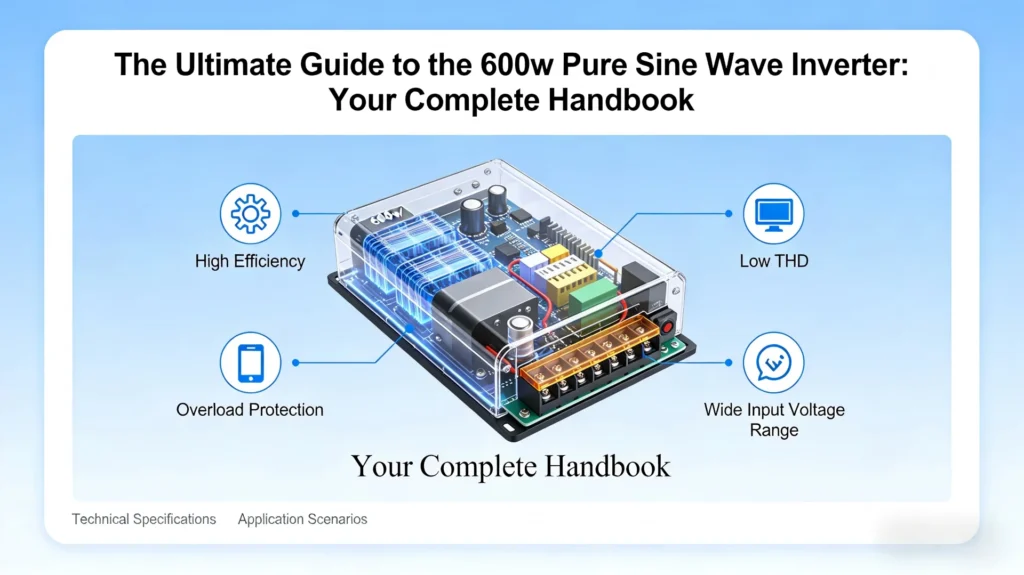
What is a 600W Pure Sine Wave Inverter and How Does It Work?
その核心は 600w pure sine wave inverter is an electronic device that converts 12V direct current (DC) from a source like a car battery into 120V alternating current (AC), matching the standard household power in North America. The “600W” denotes its continuous power output capacity, while “pure sine wave” describes the quality of the AC signal it produces.
Understanding the wave output is crucial. Inverters primarily come in two types:
- Modified Sine Wave Inverters: These create a stepped, blocky approximation of an AC wave. They are cheaper but can cause humming in audio equipment, flickering in some lights, and may damage sensitive electronics like medical devices, variable-speed tools, or laptop power supplies over time.
- Pure Sine Wave Inverters: These produce a smooth, rolling wave identical to—and often cleaner than—utility grid power. This compatibility is vital for powering anything with an AC motor, sensitive circuitry, or a switch-mode power supply without risk of malfunction, noise, or reduced efficiency.
The inverter achieves this through sophisticated circuitry. In simple terms, it uses high-frequency switching components (like MOSFETs) controlled by a microprocessor to precisely shape the DC input into a perfect sine wave, which is then boosted to the correct voltage. This process ensures the output is not only the right voltage but also the correct frequency (60Hz in the US/Canada).
Core Application Scenarios: Where is a 600W Inverter Used?
The 600-watt power rating hits a sweet spot, providing substantial but manageable power for a vast array of mobile and backup needs. Its applications span personal, recreational, and professional use.
- Road Trips & Caravanning: This is a prime use case. Users on forums like Reddit’s r/vandwellers often discuss using a 600W inverter to power small coffee makers, electric blankets, laptops, cameras, and portable fridges, transforming a vehicle into a mobile office or comfortable living space.
- Marine Use on Boats: Boaters rely on inverters to run navigation equipment, small appliances, and entertainment systems without running a loud generator. The pure sine wave is essential for sensitive marine electronics.
- Emergency Home Backup: During short-term power outages, a 600W inverter connected to a car battery can keep critical devices running: charging phones, powering a router and modem, running a few LED lights, or even a small medical device like a CPAP machine. Facebook community groups focused on preparedness frequently highlight this application.
- Tradespeople & Mobile Workshops: Electricians, contractors, and handymen use them to run battery chargers for power tools, small saws, or soldering irons directly from their work truck.
- Off-Grid & Solar Systems: As a key component in small-scale solar setups, the inverter converts stored DC battery power from solar panels into usable AC power for cabins, RVs, or remote monitoring stations.
Key Purchasing Factors: What to Consider Before You Buy
Selecting the right inverter involves more than just wattage. Overlooking key specifications could lead to underperformance or damage. Here are the critical factors to evaluate:
- Power Requirements (Wattage & Surge): First, calculate the total wattage of all devices you plan to run simultaneously. The 600W continuous rating is key, but pay equal attention to the peak or surge power (often 1200W-1800W for a 600W model). This higher surge capacity is needed for 2-5 seconds to start motors in devices like refrigerators or power tools. Undersizing your inverter is a common pitfall discussed in user reviews.
- Waveform Type: As established, for modern electronics, appliances with motors, or any sensitive gear, a pure sine wave inverter is non-negotiable. The marginal extra cost prevents long-term issues.
- Input Voltage Compatibility: Most 600W models are designed for 12V DC systems, common in cars, trucks, and small boats. Ensure your battery bank matches this. Using a 12V inverter on a 24V system will destroy it.
- Efficiency Rating: High efficiency (90-95% is excellent) means less power is wasted as heat, preserving your battery life. An inefficient inverter can drain a battery surprisingly fast.
- Protection Features: Safety is paramount. Look for inverters with built-in protections: overload, over-temperature, under-voltage (prevents deep battery discharge), over-voltage, and short-circuit protection.
- Cooling Mechanism: Passive cooling (heat sinks) is silent but may be less effective for continuous high load. Fan-cooled models are more effective at heat dissipation but add noise. Consider your primary use case.
- Output Outlets & Connectivity: Check for the number and type of AC outlets (usually 2-3). Some models include USB ports for direct device charging, a convenient feature highlighted in many product reviews.
Installation and Maintenance: Crucial Tips for Longevity
Proper setup and care are essential for safety and performance. Always consult your specific inverter’s manual first.
Installation Essentials:
Mount the inverter in a dry, well-ventilated location, close to the battery to minimize DC cable length but away from heat sources and flammable materials. The most critical step is using the correct gauge wires and fuses. For a 600w pure sine wave inverter 12v, heavy-gauge cables (typically 4 AWG or thicker) are required to handle the high current (up to 50+ Amps) with minimal voltage drop. A fuse or circuit breaker on the positive cable, placed near the battery terminal, is mandatory for fire safety. Secure all connections tightly to prevent arcing and power loss.
Routine Maintenance:
Regularly inspect cables and terminals for corrosion or looseness. Ensure the inverter’s cooling vents are clear of dust and debris. Avoid running the inverter at or near its maximum capacity for prolonged periods, as this generates excess heat and stresses components. When not in use for extended times, disconnecting it from the battery is a good practice.
よくある質問(FAQ)
Can a 600W inverter run a refrigerator?
It depends on the fridge’s size and startup surge. A small, efficient 12V RV fridge or a mini-fridge may be within its capability, but you must check the fridge’s rated wattage and, more importantly, its locked rotor amperage (LRA) or startup surge, which can be 3-5 times its running wattage. The inverter’s surge rating must exceed this spike.
How long will a car battery last with a 600W inverter?
This is a common question in online forums. The calculation is: (Battery Amp-hours * 10.5V) / Load Wattage ≈ Runtime in hours. A typical 100Ah car battery running a 300W load (half the inverter’s capacity) might last roughly (100Ah * 10.5V) / 300W = 3.5 hours before reaching a damaging discharge level. For longer runs, a deep-cycle battery is recommended.
What’s the difference between the Giandel 600w pure sine wave inverter and others?
Brands like Giandel or Projecta 600w pure sine wave inverter are often discussed for their specific feature sets. Differences can include peak surge power, the number and type of outlets, presence of a remote control, cooling fan noise levels, and the physical build quality. It’s vital to compare specifications and user reviews side-by-side.
Why is the 600w pure sine wave inverter price higher than modified sine wave?
The premium cost reflects the more complex circuitry required to generate the perfect sine wave. This involves higher-quality components, advanced microprocessors, and better filtering systems. The investment safeguards your expensive electronics.
Can I plug it into a cigarette lighter socket?
This is strongly discouraged for a 600W model. A cigarette lighter socket is typically fused for 10-15 amps (120-180W). Drawing the 50+ amps needed for a 600W load will blow the fuse, overheat the wiring, and pose a serious fire hazard. Direct connection to the battery via appropriate cables is the only safe method.
Why Choose GTR for Your Power Inversion Needs?
In a market filled with options, GTR distinguishes itself through engineering rigor and user-centric design. Our 600w pure sine wave inverter is built not just to meet specifications, but to exceed reliability expectations in real-world conditions.
Our technical advantages include an industry-leading efficiency rating of over 92%, ensuring more of your battery’s power goes to your devices. We incorporate a robust array of protection features managed by an intelligent microprocessor, safeguarding both the inverter and your connected equipment. Our units feature a low-noise, temperature-controlled cooling fan that only engages when necessary, balancing performance with quiet operation—a detail appreciated by van lifers and boaters.
Beyond the core technology, GTR provides exceptional support and transparency. Detailed specifications, clear installation guides, and a responsive customer service team ensure you have the right information and help when you need it. We invite you to explore our full range of power solutions and detailed specifications on our official site at https://www.rhgtr.com/ to make an informed decision for your mobile or backup power needs.
Ready to experience clean, reliable power anywhere? Don’t compromise on the safety of your electronics. Explore the technical details and robust design of the GTR 600W Pure Sine Wave Inverter on our product page. For more insights and expert guides on power accessories and automotive lighting technology, visit our learning center at rhgtr.