In the evolving world of automotive lighting, the shift from standard halogen reflectors to advanced LED projection is undeniable. For automotive enthusiasts, retrofit shops, and wholesale distributors, understanding the intricate workings of a Projector Lens factory is crucial. This guide serves as your comprehensive resource to understanding projector technology, how these components are manufactured, and what defines industry-leading quality.
Whether you are upgrading a Tesla or restoring a vintage Toyota, the quality of the light begins at the manufacturing source. This article explores the engineering behind the lens, the applications in modern vehicles, and how to identify a partner that values precision over mass production.
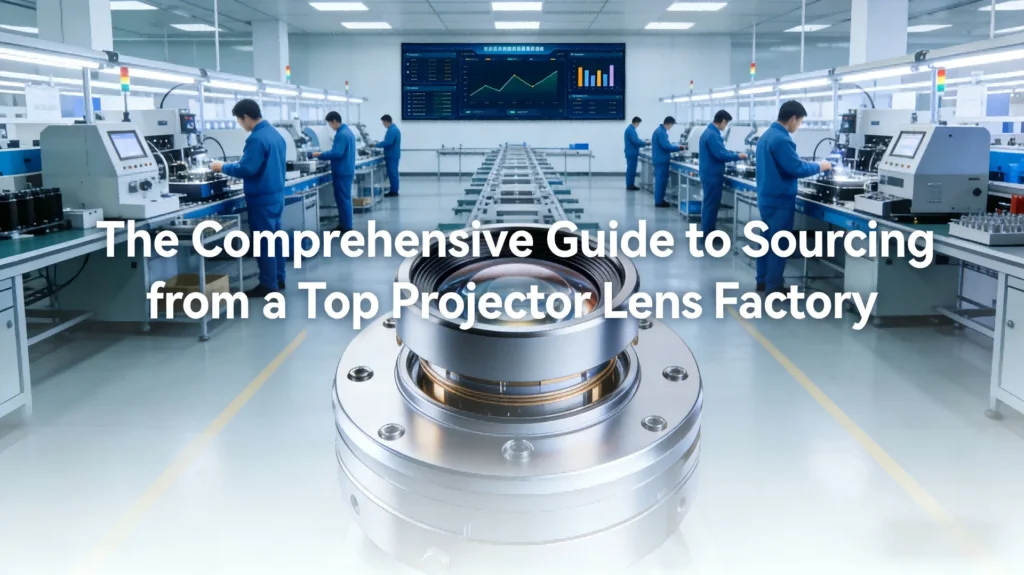
Understanding the Technology: How Projector Lenses Work
Unlike traditional reflector headlights that scatter light using a mirrored bowl, a projector lens system works on a much more precise optical principle. If you look at discussions on Reddit or automotive forums, you might see users debating the “cutoff line.” This distinct feature is the hallmark of a quality projector.
A projector lens assembly typically consists of three main components:
- The Reflector Bowl: This sits behind the bulb (or LED chip) and gathers the light.
- The Cutoff Shield (Shutter): This plate blocks a portion of the light to prevent blinding oncoming traffic, creating that sharp horizontal line.
- L'objectif : A convex piece of glass (or high-grade polymer) that magnifies and projects the focused beam onto the road.
When you source from a professional Projector Lens factory, you are essentially buying a sophisticated optical instrument. The factory must ensure that the focal point of the LED chip aligns perfectly with the focal point of the lens. Even a deviation of a fraction of a millimeter could result in a blurry output or reduced range.
Core Application Scenarios: From Sedans to Supercars
Projector lenses have moved beyond just luxury vehicles. While they were once the domain of high-end BMW and Mercedes-Benz models, they are now essential for safety across various vehicle categories.
1. Modern Electric Vehicles (Tesla, BYD)
EVs require energy-efficient lighting to maximize battery range. High-quality projector lenses explained in technical manuals show that they direct more light to the road with less wasted energy compared to open reflectors. A specialized fabricant de lentilles pour projecteurs will often tune the optics specifically for the aerodynamic, low-profile headlights found on cars like the Tesla Model 3.
2. Off-Road and Heavy Duty (Toyota Tacoma, Ford F-Series)
For off-road applications, durability is key. The internal components of the projector must withstand heavy vibration without the shutter shaking loose. Factories producing for this sector focus heavily on shock-proof internal brackets and sealed optical units to prevent dust ingress.
Key Buying Factors: Evaluating a Projector Lens Manufacturer
When evaluating a projector lens supplier, you should not look at price alone. The “price war” often leads to compromised materials. Here are the critical factors to consider:
Optical Clarity and Blue Tint
You may hear the term “crystal clear.” A top-tier Projector Lens factory uses high-purity glass. Some lenses are treated to have a slight blue hue on the cutoff line, a feature highly desired by enthusiasts for its aesthetic appeal. This requires precise coating technologies during manufacturing.
Heat Dissipation Management
LEDs run cooler than halogens but still generate significant heat at the chip level. If the projector assembly does not have adequate heat sinking (often made of aluminum or copper), the LED lifespan will degrade. A reputable factory tests their units in high-temperature ovens to ensure longevity.
Beam Pattern Width
Safety isn’t just about how far you can see; it is about how much of the roadside you can see. A superior projector throws a wide beam, illuminating potential hazards like deer or pedestrians entering the road from the side.
Installation and Maintenance Insights
Installing a projector lens—often called a “retrofit”—can be a DIY project or a professional job. If you are retrofitting a car that originally came with halogen reflectors, you may need to open the headlight housing.
- Sealing: Ensure the headlight is resealed properly with butyl rubber to prevent moisture.
- Alignment: After installation, the cutoff line must be aimed. The left side should be lower than the right (in right-hand traffic countries) to avoid blinding oncoming drivers.
- Maintenance: Projector lenses are generally low maintenance. However, over years, cheap plastic lenses may yellow. Glass lenses sourced from a premium Projector Lens factory do not suffer from UV degradation.
Why Choose GTR as Your Manufacturing Partner?
In a market flooded with generic options, GTR stands out by bridging the gap between OEM quality and aftermarket flexibility. As a dedicated manufacturer, GTR controls the entire supply chain, from raw aluminum casting to the final optical polishing.
GTR focuses on:
- Precision Engineering: Utilizing automated assembly lines to ensure every solenoid and shutter mechanism operates smoothly for thousands of cycles.
- Customization: Whether you need Bi-LED projectors or specialized laser-assist modules, GTR has the R&D capability to adapt.
- Compliance: Ensuring beam patterns meet international standards for road safety.
For more details on our manufacturing capabilities, visit GTR’s official site.
FAQ: Common Questions About Projector Lenses
1. How many lens used in projector headlights?
Typically, a single headlight unit uses one main projection lens for the low beam. However, in Bi-LED systems, that single lens handles both low and high beams via a moving shutter. Some modern matrix setups may use multiple smaller lenses.
2. Can I replace a reflector with a projector?
Yes, this is called a retrofit. It significantly improves light output but requires selecting the right size (e.g., 2.5 inch or 3 inch) from a reliable projector lens supplier.
3. Are aftermarket projector lenses legal?
They are legal if they meet the beam pattern requirements of your local transport authority (such as DOT or ECE). It is vital to aim them correctly.
4. Do projector lenses reduce glare?
Absolutely. This is their primary safety advantage. The internal cutoff shield physically blocks light from shining into the eyes of oncoming drivers.
5. What is the difference between Bi-Xenon and Bi-LED?
Bi-Xenon uses HID bulbs, while Bi-LED uses integrated LED chips. Bi-LED is becoming the standard due to instant-on functionality and longer lifespan.
When you are ready to elevate your lighting standards, choosing the right Projector Lens factory is the first step toward a brighter, safer driving experience.