You know the scenario well. You walk into your living room, switch on that classic torchiere lamp, and within minutes, the top of the fixture becomes hot enough to fry an egg. It is a common household narrative: the halogen floor lamp bulb provides incredible brightness, but it comes with a steep price—extreme heat, high energy consumption, and a short lifespan. For many homeowners, this creates a distinct problem, especially in households with children, pets, or a desire for energy efficiency.
The solution does not require throwing away your stylish lamp. Instead, it lies in understanding the mechanics of your current lighting and upgrading to a modern halogen led bulb replacement. This guide will walk you through the safety risks of traditional bulbs and how high-performance LED technology—similar to the engineering found in GTR automotive lighting—can revolutionize your indoor illumination.
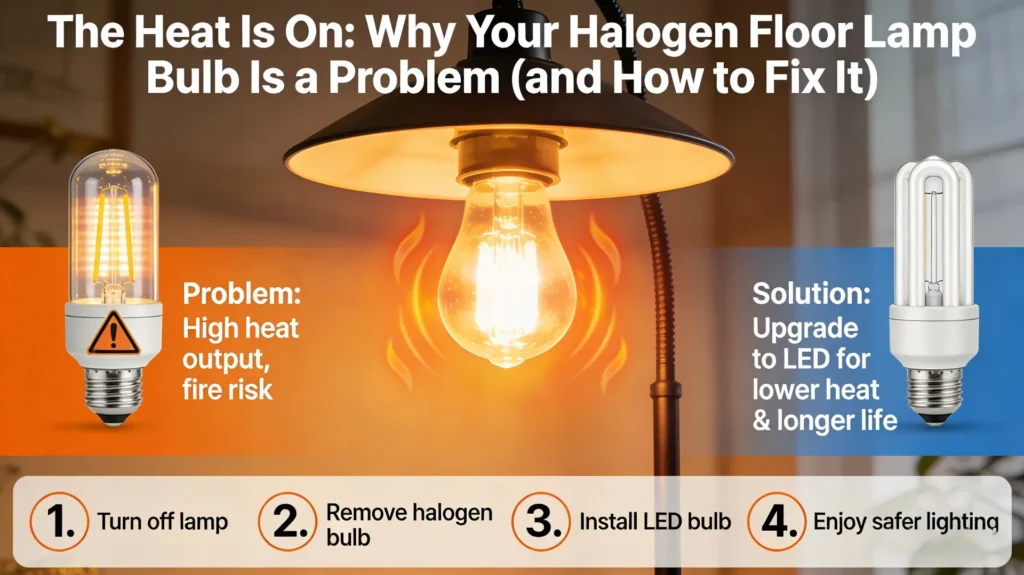
The Core Problem: What Is a Halogen Floor Lamp Bulb?
To understand the solution, we must first diagnose the issue. A standard halogen floor lamp light bulb is essentially an incandescent lamp with a twist. It uses a tungsten filament encased in a small quartz envelope filled with halogen gas (usually iodine or bromine). This gas creates a “halogen cycle,” which redeposits tungsten back onto the filament, allowing it to burn hotter and brighter than standard bulbs.
However, this “hotter” aspect is the primary pain point. These bulbs, often Double-Ended T3 types (R7s base), operate at temperatures exceeding 1,000°F (540°C). This creates several issues:
- Safety Hazards: The extreme heat can ignite dust, curtains, or inadvertently touched skin.
- Energy Waste: Approximately 90% of the energy consumed by a halogen bulb is turned into heat, not light.
- Maintenance Frequency: Despite the halogen cycle, the extreme thermal stress often leads to frequent burnouts, requiring constant halogen floor lamp bulb replacement.
The Solution: The Halogen LED Bulb Revolution
The answer to the “heat problem” is the Light Emitting Diode (LED). Replacing your hot halogen with a specifically designed LED retrofit bulb solves the thermal management issue while maintaining—or improving—luminosity.
Modern LED replacements for floor lamps utilize rows of high-efficiency SMD (Surface Mounted Device) chips mounted on a heat-dissipating substrate. Unlike the omnidirectional heat of a halogen, LEDs are directional and run significantly cooler. This transition mirrors the evolution seen in the automotive industry, where brands like GTR have moved from halogen headlights to precision LED systems for superior clarity and safety.
Key Benefits of Switching to LED:
- Cooler Operation: Reduces fire risk significantly.
- Energy Efficiency: A 300W halogen equivalent might only consume 20W to 30W of power as an LED.
- Color Temperature Options: Unlike the fixed warm glow of halogen, LEDs allow you to choose between Warm White (3000K) or Daylight (6000K).
How to Select and Install the Right Solution
Finding the correct halogen torchiere floor lamp bulb replacement requires checking a few technical specifications. It may seem daunting, but it is actually quite straightforward if you follow these steps.
1. Identify the Length (The R7s Base)
Most floor lamps use double-ended bulbs. The two most common lengths are:
- 118mm (approx. 4.65 inches): The most common size for high-wattage floor lamps.
- 78mm (approx. 3 inches): Common in smaller work lamps or reading lights.
Note: You could measure your old bulb from tip to tip to ensure accuracy before ordering.
2. Check the Diameter
Some LED replacements are thicker than the original thin glass halogen tubes. Ensure your lamp’s housing has enough clearance for the slightly bulkier LED heatsink.
3. Dimmer Compatibility
This is a critical “gotcha” moment. Halogen bulbs are naturally dimmable. LEDs require specific electronic drivers to dim. If your floor lamp has a dimmer switch, you must purchase a “Dimmable” halogen led bulb. Using a non-dimmable LED on a dimmer switch could cause flickering or buzzing.
Installation and Maintenance Tips
Once you have your halogen floor lamp bulb replacement, installation should be handled with care. While LEDs are more durable, the fixture itself may still be fragile.
- Power Off: Unplug the lamp. If the old bulb was just on, wait at least 20 minutes for it to cool down.
- Remove the Old Bulb: Push one end of the bulb into the spring-loaded socket to release the other end.
- Insert the LED: Unlike halogens, where skin oils can damage the quartz glass, LEDs are generally safe to touch. However, keeping them clean ensures maximum brightness. Insert one end, push against the spring, and slot the other end in.
- Test: Plug the lamp back in. If the light flickers, double-check that your dimmer is compatible with LED loads.
Core Application Scenarios: Where Lighting Matters
While we are discussing floor lamps, the technology behind high-intensity discharge and LED projection is universal. High-lumen lighting is critical in various environments:
- Home Studios & Living Rooms: Where halogen floor lamp bulbs provide uplighting to expand the visual space of a room.
- Automotive Lighting (The GTR Connection): Just as you need reliable light in your living room, vehicles like the Toyota Camry or Tesla Model 3 rely on premium lighting for safety. The transition from halogen to LED in cars parallels the home transition—seeking better visibility (lumens) with less power draw.
- Industrial Workspaces: Work lights often use the same R7s base bulbs. Switching these to LED reduces the risk of burns for workers operating in tight spaces.
Why Choose GTR Technology?
You might ask, “What does a car light expert know about lighting quality?” The answer is: Everything. GTR specializes in creating high-lumen, optically precise lighting solutions that must withstand the rigors of the road—vibration, extreme temperature shifts, and long operational hours.
When you look for lighting quality, the engineering principles championed by GTR—such as advanced copper PCB boards for heat dissipation and precision optical lenses—are the gold standard. Whether it is a halogen led bulb for your car or a replacement for your home, the underlying requirement is quality engineering that prevents overheating and ensures consistent light output. Choosing products that adhere to these high manufacturing standards ensures you won’t be replacing that bulb again anytime soon.
Preguntas más frecuentes (FAQ)
1. Can I replace a 300W halogen bulb with an LED?
Yes, you can. A 20W to 30W LED is typically bright enough to replace a 300W halogen, offering similar lumen output without the intense heat.
2. Why is my new LED replacement flickering?
This usually happens because the floor lamp’s dimmer switch is designed for high-resistive loads (halogens) and not low-wattage electronic loads (LEDs). You may need to bypass the dimmer or replace it with an LED-compatible switch.
3. Are halogen floor lamp bulbs banned?
In many regions (like the EU and parts of the US), general-purpose incandescent and some halogen bulbs are being phased out due to energy inefficiency. Switching to a halogen led bulb future-proofs your fixture.
4. Do LED replacements fit all torchiere lamps?
Most fit, but check the diameter. Some older lamps have very tight glass shields. Ensure the LED you buy is “slim” or fits within the housing dimensions.
5. What color temperature should I choose?
If you want to match the old halogen glow, choose 3000K (Warm White). If you want a modern, crisp look for reading or tasks, choose 5000K-6000K (Daylight).