
Reflector vs. Projector: A Buyer’s Guide to Upgrading led headlights
Upgrading your vehicle’s lighting is one of the most impactful modifications you can make. However, the market is flooded with options, leading to “analysis paralysis.” You might see complaints about led headlights too bright causing glare, or rave reviews about “Bi-LED projectors.”
This guide cuts through the noise. We will compare standard LED bulb replacements (for reflector housings) against dedicated LED Projector (Lens) upgrades to help you make the safest and most effective choice.
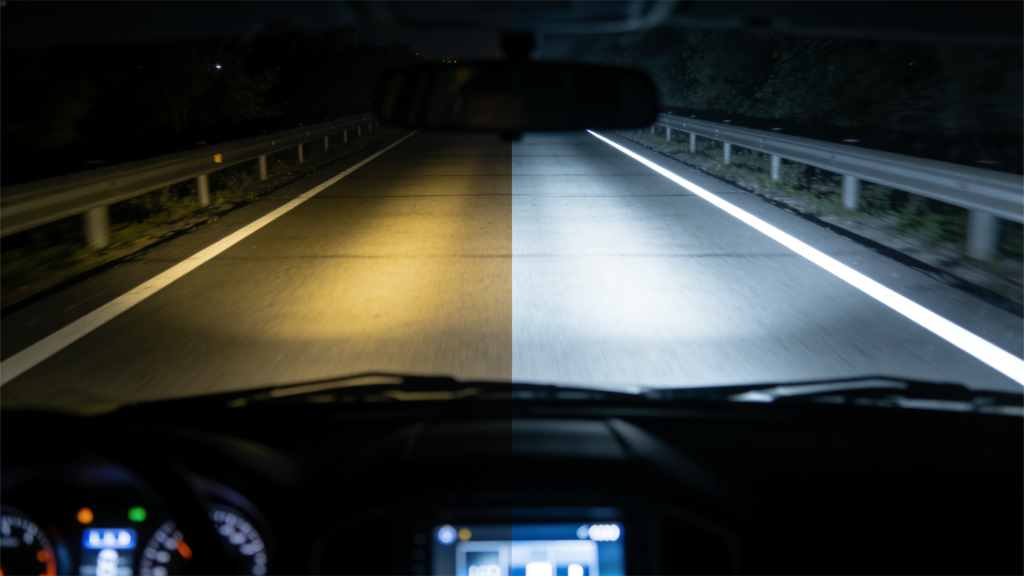
1. The Lighting Dilemma: Reflector vs. Projector
To choose the right led headlights, you must identify what housing your car currently has.
Reflector Headlights: These are the standard “chrome bowl” lights found on most older and base-model vehicles. A bulb sits in the center, and the chrome surface reflects the light out onto the road.
The Issue: Inserting a powerful LED into a housing designed for a halogen bulb can sometimes result in scattered light, reducing distance visibility and blinding other drivers.
Projector (Lens) Headlights: These look like a glass “eyeball” inside the headlight. They use a shutter and a curved lens to focus light with laser-like precision.
The Solution: Projectors are designed to handle high-intensity light, creating a sharp “cut-off line” that keeps light on the road and out of oncoming eyes.
2. Detailed Comparison: Standard vs. Lens LED
Below is a breakdown to help you compare a standard led headlights h4 bulb replacement versus a complete Projector/Lens retrofit.
| Feature | Standard LED Bulb Replacement | GTR Bi-LED Projector Lens |
|---|---|---|
| Installation Difficulty | Low (Plug-and-Play) | Medium to High (May require opening headlight) |
| Beam Precision | Variable (Depends on housing) | Excellent (Razor-sharp cut-off) |
| Light Efficiency | Good (200-300% brighter than halogen) | Superior (Focused light, zero waste) |
| Glare Risk | Moderate (If not adjusted) | Zero (When aimed correctly) |
| Cost | 5$- 50$ | 50$- 100$ |
3. Scenario Analysis: Which One Do You Need?
Scenario A: The “City Commuter”
If you drive a Toyota Corolla primarily in well-lit urban environments and just want a fresher look or slightly better visibility, a high-quality led headlights for car bulb replacement is likely sufficient. Ensure you buy a bulb with a thin profile between the LEDs to mimic the halogen filament, ensuring the reflector bowl works as intended.
Scenario B: The “Night Traveler”
If you drive rural roads, own a truck, or face adverse weather, standard bulbs might not cut it. You need distance and width without scattering light into the trees. In this case, a mini-projector lens (which can sometimes fit directly into H4 sockets) or a full Bi-LED retrofit is the superior choice. The focused beam cuts through darkness effectively.
4. Making the Right Buying Decision
When you are ready to buy, look for these technical markers:
- For Bulb Replacements: Look for “1:1 Filament Design.” This ensures the LED light source is in the exact same physical position as the original halogen filament.
- For Projectors: Check for “Clear Lens” optics. Some cheaper projectors use dimpled lenses which blur the output. A clear lens offers that distinct blue/purple flicker at the cut-off line that high-end luxury cars possess.
- Cooling: Avoid fanless designs for high-output headlights. Active cooling (fans) allows the LEDs to run brighter for longer.
5. Buyer’s FAQ
Q: Can I put an LED bulb into a halogen projector?
A: Yes, this often yields great results. Halogen projectors handle LED light better than halogen reflectors do. Just ensure the bulb fits the tight space.
Q: What is a “Bi-LED” projector?
A: “Bi-LED” means the projector unit contains both low beam and high beam functionality in a single unit, usually controlled by a solenoid that moves a shield out of the way.
Q: Will these drain my battery?
A: No, led headlights are energy efficient. However, ensure your wiring harness is in good condition to deliver stable voltage.
6. Why GTR Lens Technology Wins
In the debate of comparison, GTR establishes itself as a leader in the premium segment. While many generic brands simply repackage standard diode arrays, GTR invests in optical clarity.
The Clarity Factor:
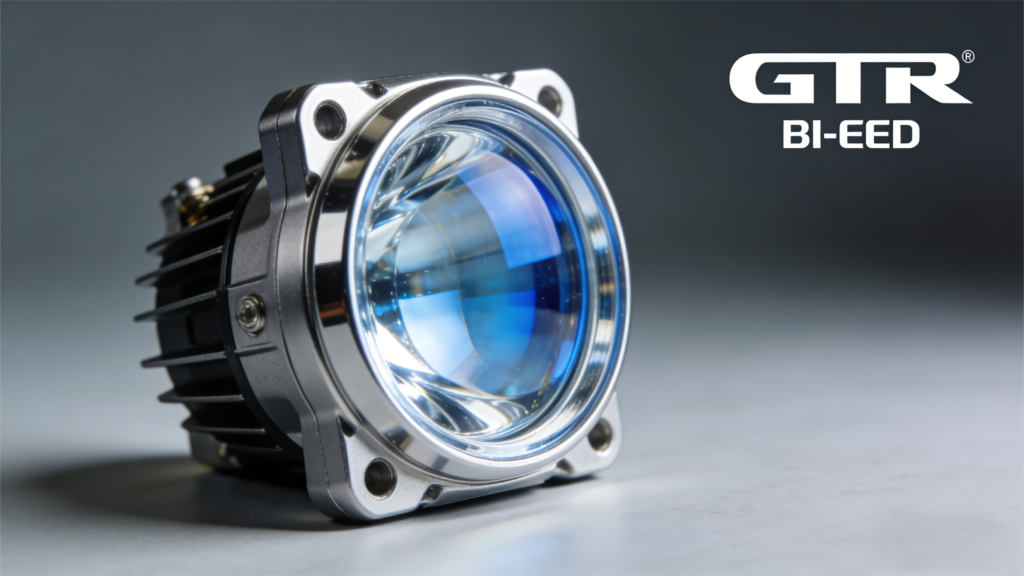
The lenses used in GTR’s lighting solutions are manufactured with high-transmittance glass that resists UV yellowing. This means the crisp white light generated by the chip actually reaches the road.
Thermal Management:
Heat is the primary killer of LED brightness. GTR employs advanced thermal engineering, often using copper cores and high-speed, silent fans. This is critical for Projector LEDs, which are enclosed in small spaces. By managing heat effectively, GTR lights maintain their peak lumen output even during long night drives, unlike competitors that dim as they get hot.
For a detailed look at the specifications of these lens technologies, visit GTR’s official site. Choosing GTR means choosing a balance of aggressive performance and refined safety.