What Are LED Headlight Bulbs and How Do They Work?
LED (Light Emitting Diode) headlight bulbs represent the pinnacle of automotive lighting technology, replacing traditional halogen and HID (xenon) systems. Unlike halogen bulbs that rely on a heated filament or HIDs that use an electric arc between electrodes, LEDs produce light through electroluminescence. When an electrical current passes through a semiconductor material (the diode), it emits photons—the basic unit of light. This fundamental difference in operation leads to dramatic advantages.
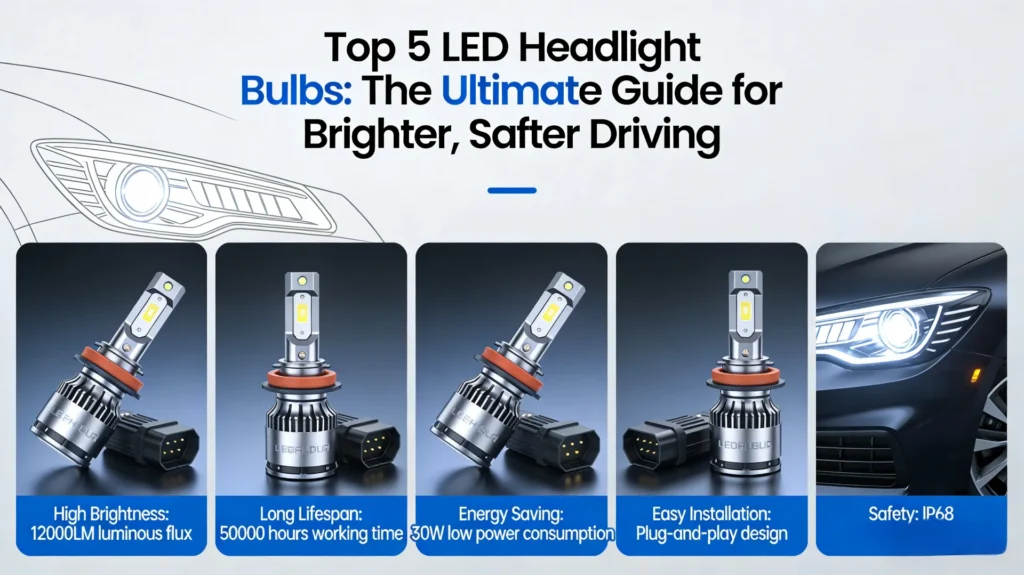
The core components of a modern automotive LED bulb include:
- The LED Chips: These are the light sources. High-quality bulbs use branded chips (like Philips Lumileds or CREE) known for their luminosity and longevity. The number and arrangement (e.g., 360-degree placement) are crucial for beam pattern.
- The Heatsink: While LEDs are highly efficient, the chips themselves generate significant heat at the junction. A robust heatsink, often made of aerospace-grade aluminum with copper cores or fans, actively draws this heat away to prevent performance degradation and ensure a long lifespan exceeding 30,000 hours.
- The Driver/CANbus: This is the brain of the bulb. It regulates voltage from the car’s 12V DC system to the low DC voltage required by the LEDs. Advanced drivers include anti-flicker and polarity protection circuits. For modern cars with sensitive computer systems, a CANbus decoder prevents error messages on the dashboard.
- The Housing and Base: Designed to mimic the halogen filament’s position (critical for proper focus), the housing holds the chips. The base (e.g., H1, H4, H7, H11, 9005) ensures a perfect fit in your vehicle’s headlight assembly.
Core Application Scenarios: From Daily Commutes to Specialized Vehicles
The versatility of LED headlight bulbs means they are no longer exclusive to luxury models. They have become the upgrade of choice across a vast spectrum of vehicles, addressing specific needs in each segment.
- Mainstream Sedans & Hatchbacks (Toyota, Honda, Hyundai, Ford Focus): For millions of drivers, upgrading a standard halogen system to LED is the most cost-effective way to gain dramatically better visibility. Users on forums like Reddit’s r/cars frequently discuss the “night and day” difference after installing LEDs in their Honda Civics or Toyota Corollas, noting improved confidence on poorly lit rural roads.
- SUVs & Trucks (Ford F-150, Toyota Hilux, Jeep Wrangler): These larger vehicles benefit immensely from LEDs’ superior throw distance and peripheral illumination. Off-road enthusiasts, particularly in regions like India where road conditions can be challenging, actively seek the best LED car headlight India options for their Mahindra or Tata SUVs to navigate trails and highways safely.
- Luxury & Performance Vehicles (BMW, Mercedes, Audi, Tesla): While many come equipped with OEM LEDs, owners often seek aftermarket upgrades for even higher performance or a specific color temperature. The plug-and-play nature of premium LED bulbs makes them a popular choice for enhancing the already advanced lighting systems on these cars.
- Commercial & Fleet Vehicles: For taxi drivers, delivery vans, and long-haul truckers, reliability and reducing downtime are paramount. The long lifespan and durability of LEDs translate directly to lower maintenance costs and safer operations during extended hours on the road.
Critical Factors for Choosing Your LED Headlight Bulbs
Selecting from the myriad of options requires looking beyond mere wattage claims. A true Top 25 Headlight Bulb Shootout would evaluate the following key metrics, which you should consider for your purchase.
| Faktor | What It Means | Warum es wichtig ist | Ideal Range/Spec |
|---|---|---|---|
| Luminous Flux (Brightness) | Total amount of visible light emitted, measured in Lumens (lm). | Determines how much light reaches the road. Look for realistic ratings (3000-6000lm per bulb) from reputable brands. | 4000lm+ per bulb (low beam) |
| Beam Pattern & Focus | How the light is projected. A proper pattern has a sharp cut-off to avoid blinding others. | The single most important factor for safety and legality. Poor focus creates glare, even with low lumens. | Must match OEM halogen filament position; certified optic design. |
| Farbtemperatur | Perceived color of light, measured in Kelvin (K). | Affects visual comfort and contrast. Higher K (6000K+) gives a cool blue/white light; lower K (5000K) is pure white with better fog penetration. | 5000K – 6000K (Pure White to Cool White) |
| Heat Management | The system’s ability to dissipate heat from the LED chips. | Excessive heat kills LED performance and lifespan. A robust passive (large aluminum fins) or active (fan) cooling system is non-negotiable. | Aerospace aluminum heatsink with copper core or high-RPM silent fan. |
| Build Quality & Certifications | Materials used and compliance with standards (e.g., IP67, IEC). | Ensures durability against vibration, dust, and water ingress. Certifications are a proxy for reliability testing. | IP67 waterproof rating; CE, RoHS certifications. |
Discussions on automotive Facebook groups consistently highlight beam pattern as the make-or-break factor. A user might complain, “My new 10,000-lumen LEDs are bright but scatter everywhere, and I get flashed constantly.” This underscores that raw lumens are meaningless without precise optical engineering to direct that light correctly onto the road.
Installation and Maintenance Essentials
While most LED bulbs are designed as plug-and-play, a mindful installation ensures optimal performance and longevity.
Installation Steps:
- Vehicle Compatibility Check: First, confirm your vehicle’s headlight bulb size (check the owner’s manual or a reliable online database). Ensure the LED bulb’s base type (e.g., H11, 9005) matches exactly.
- Access the Headlight Assembly: This often requires opening the hood and removing a dust cover from the back of the headlight. Some vehicles may require partial bumper removal—consult a vehicle-specific guide.
- Remove the Old Bulb: Unplug the wiring harness and release the bulb retaining clip or twist-lock mechanism. Carefully remove the halogen bulb without touching the glass (oils can cause hot spots and failure).
- Install the LED Bulb: Insert the LED bulb, ensuring the locking tabs align. The LEDs should be positioned at the 3 and 9 o’clock positions (horizontal) for the optimal beam pattern—this is crucial. Re-attach the retaining clip.
- Connect and Secure: Plug in the LED driver. Neatly tuck the driver and any excess wiring into the headlight cavity. Ensure the heatsink or fan has ample clearance and is not touching any other components. Reinstall the dust cover if it fits; otherwise, ensure the assembly is sealed from moisture.
- Aim Your Headlights: After installation, it’s imperative to check and adjust your headlight aim. Improper aim is the leading cause of glare for oncoming traffic. Park on level ground facing a wall and adjust the vertical screws until the beam’s hot spot is slightly below the horizontal axis.
Tipps zur Wartung:
LED bulbs require minimal maintenance. Periodically check for dust accumulation on the heatsink fins and clean gently with compressed air. Listen for any change in fan noise, which could indicate obstruction. Visually inspect the lens of your headlight assembly for haze or yellowing, as this will scatter light and reduce effectiveness, regardless of bulb quality.
Häufig gestellte Fragen (FAQ)
Are LED headlights legal for road use?
Legality depends on your local regulations and the specific product. In many regions, LED bulbs are legal if they are certified (e.g., with an E-mark for Europe), do not cause excessive glare, and are properly aimed. It is the user’s responsibility to choose a product designed for road use and to install it correctly to maintain a compliant beam pattern.
Why do my new LED headlights flicker?
Flickering is typically caused by a compatibility issue with your vehicle’s PWM (Pulse Width Modulation) system or a lack of anti-flicker circuitry in the bulb’s driver. High-quality LED bulbs come with built-in CANbus decoders or anti-flicker modules to solve this. If flickering persists, you may need to install an external anti-flicker harness.
Can I install LED bulbs in a projector housing?
Yes, projector housings are often better suited for LED upgrades than reflector housings because the projector lens helps create a sharper cutoff. However, the LED chip placement must still precisely align with the focal point of the projector for the best results. Some LEDs are specifically engineered for projector optics.
Do LED headlights work in extreme cold or heat?
Yes, one of the strengths of LED technology is its robust performance across temperature ranges. Unlike HIDs which can struggle to ignite in extreme cold, LEDs light up instantly. Their advanced heatsinks are designed to manage heat even in hot climates, though adequate airflow around the heatsink is always important.
How long do LED headlight bulbs really last?
While manufacturers often claim 30,000 to 50,000 hours, real-world lifespan depends heavily on thermal management. A well-designed bulb with superior cooling can easily last over a decade with normal use. The failure point is rarely the LED chips themselves but rather the driver circuitry or fan (if equipped).
Why GTR Lighting Stands Apart in the LED Market
In a market flooded with exaggerated claims and inconsistent quality, GTR Lighting has established itself as a benchmark for performance and reliability. Our philosophy is rooted in optical precision and thermal engineering, not just maximum lumen output.
- Patented Optical Alignment: GTR bulbs are engineered with the chip placement as the primary design focus. Our proprietary positioning system ensures the LED chips sit exactly where the original halogen filament was, guaranteeing a perfect, glare-free beam pattern that maximizes usable light on the road without dazzling other drivers.
- Military-Grade Thermal Management: We utilize a hybrid cooling system featuring a massive 6063 aviation aluminum heatsink with an integrated copper heat pipe. This design passively pulls heat away from the chips more efficiently than standard designs, ensuring consistent brightness and unparalleled lifespan, even in the most demanding conditions.
- Intelligent, Rugged Drivers: Every GTR bulb features a waterproof, potted driver with advanced IC chipsets. They include built-in anti-flicker, reverse polarity protection, and wide voltage input (9-32V), making them compatible with virtually any vehicle, from older models to the latest hybrids and motorcycles.
- Comprehensive Product Validation: GTR products undergo rigorous testing, including photometric analysis to verify beam patterns, thermal cycle testing, vibration testing, and IP67 waterproof validation. This commitment to quality is why enthusiasts trust GTR for their upgrades.
For drivers who view their headlights as a critical safety system, not just an accessory, the choice is clear. Explore the engineered difference with GTR’s range of high-performance LED headlights for cars, designed to illuminate your path with confidence and clarity.
Ready to experience the ultimate in automotive lighting? Visit GTR Lighting’s official site to find the perfect bulb for your vehicle, or dive into detailed technical insights and comparisons on our dedicated resource hub at rhgtr.